Categories
Cinema Cinema Shame

The Crimson Pirate: Swashbuckler Shame

crimson pirate

Swashbuckler Shame: The Crimson Pirate

For the Cinema Shame prompt for March, we settled on Swashbucklers and Pirate movies. Because Maarrrrrggch, obviously. Also, I’ve had the genre on my mind lately after introducing my daughters to Errol Flynn last month. While I’ve spent significant time with Errol, the genre outside of his contribution remained somewhat hazy. I’ve decided to entertain more plundering and pillaging in addition to the standard allotment swashing and buckling.

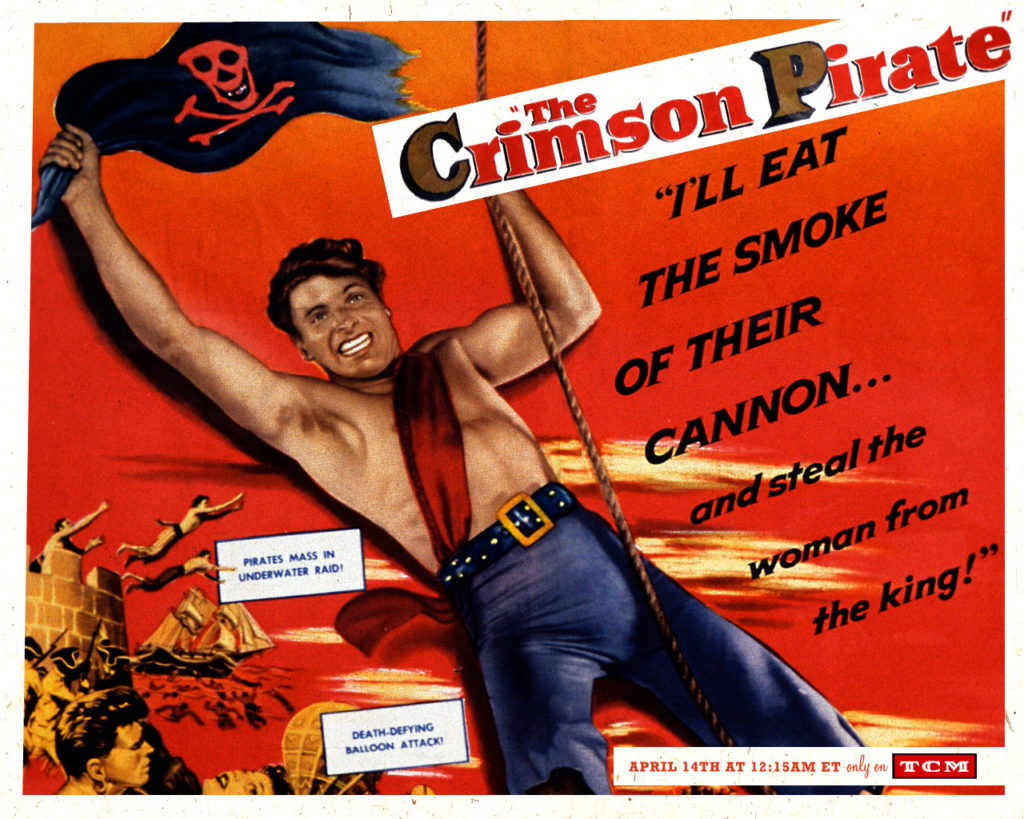
While I placed The Black Pirate (1928) on my Shame Statement for year, I inexplicably elected to watch The Crimson Pirate (1952) to satisfy the Maarrrrrgggch requirement. Burt Lancaster and early 1950’s Technicolor sounded rather essential, and I was still trying to wrangle a copy of The Black Pirate from the Pittsburgh public library system.
the crimson pirate

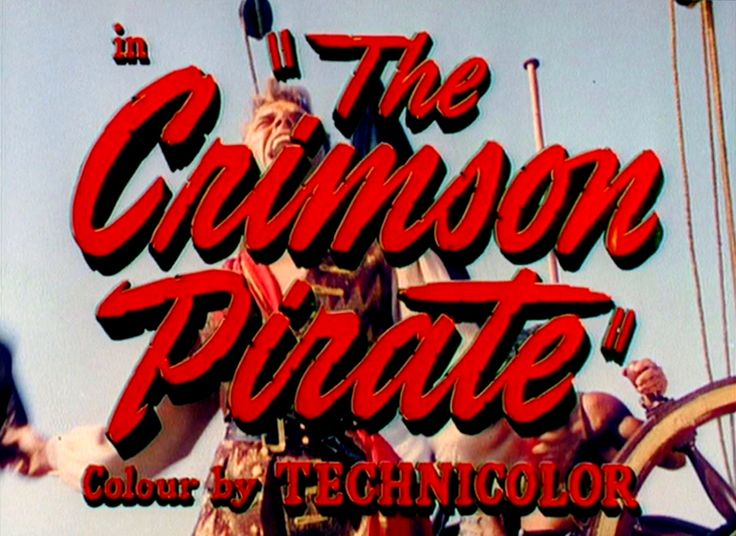
Having not done my homework on the film beforehand, I was struck by the “directed by Richard Siodmak” credit straightaway. Siodmak, known primarily for his B-movie and film noir output in the 1940’s, seemed an odd choice for a color-splashed Caribbean adventure film.

In his autobiography, Christopher Lee (who appears in The Crimson Pirate in a minor, thankless roll of one-note stoicism) said that Siodmak had been given a solemn script by screenwriter Waldo Salt, but that after reading the material the director refashioned the script into a comedy. The film’s producers may have feared association with Salt’s rumored communist ties, and though I’ve read nothing in my brief searches to suggest that the producers intervened in Siodmak’s creative process it seems likely that they also a hand in the rewrite and tonal shift.

Perhaps too long constrained by the grayscale genre limitations in Film Noir, Siodmak embraced the opportunity to direct this sprawling light adventure film with his The Killers star Burt Lancaster. While Lancaster fares well outside his comfort zone — 100-watt charisma plays, no matter the genre — a defter directorial touch might have better expedited the sluggish middle bits.
the crimson pirate

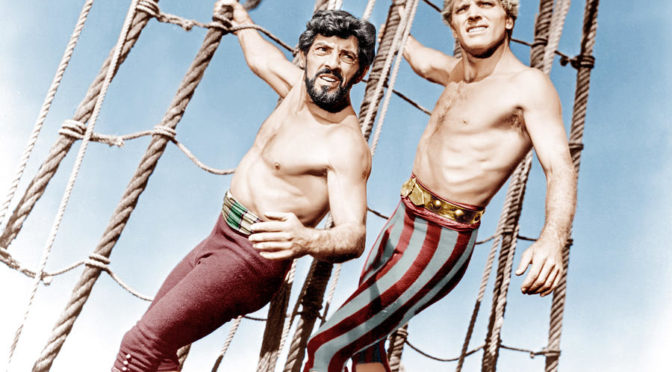
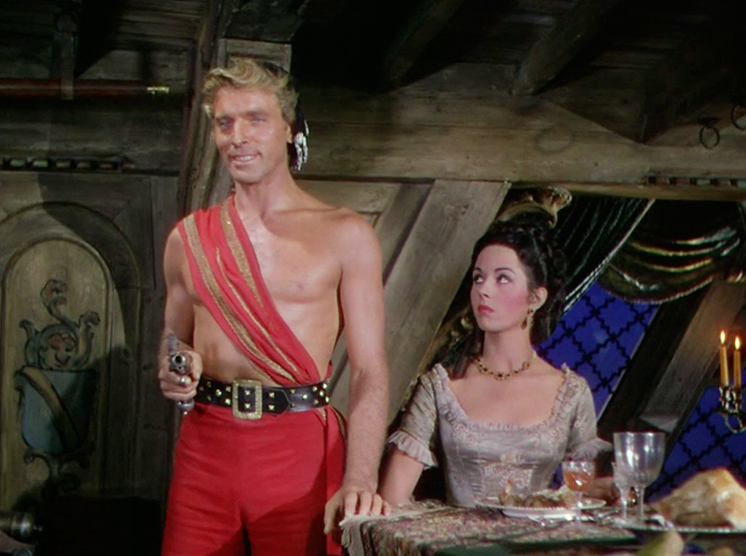
The film wastes no time in presenting itself as a lark, introducing itself with a Bye Bye Birdie-style sequence (or rather Bye Bye Birdie borrowed the Crimson Pirate opening) with Burt Lancaster introducing the film while swinging back and forth between ship masts, bare-chested and grinning ear to ear.

Siodmak’s film moves along at a steady clip, mixing elaborate slapstick choreography with double crossing and a side of swashbuckling. Casual glancers would presume the film to be a 1950’s MGM-brand musical based on costuming. color and boisterous puffery.
the crimson pirate

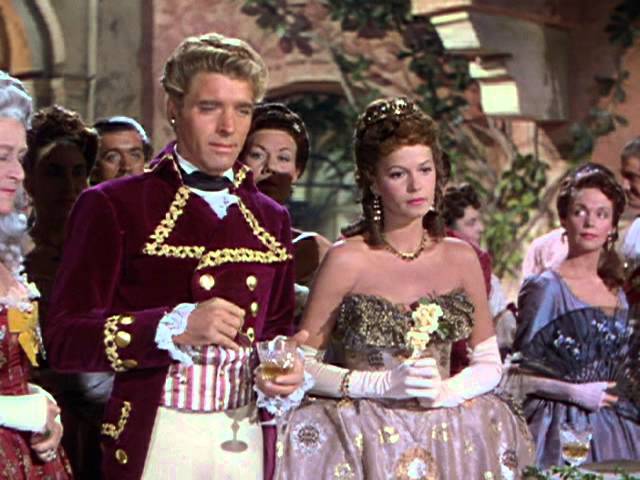
Burt Lancaster plays Captain Vallo, a famous scourge of the seven seas known as, of course, the Crimson Pirate. He and his crew capture a frigate belonging to the King carrying Baron Gruda, a special envoy on his way to crush a rebellion on the island of Cobra. Vallo suggests selling the frigate’s weapon’s cash to the rebel leader El Libre. Gruda humbly suggests there would be more money to be made by capturing El Libre and selling him to the King.

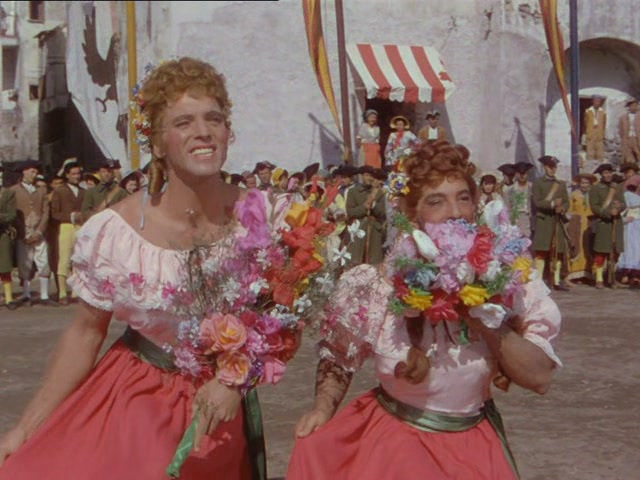
Vallo and his lieutenant, Ojo (Nick Cravat), meet the island’s rebels, lead by Pablo (Noel Purcell) and Consuelo (Eva Bartok), and learn that El Libre has been imprisoned on the island of San Pero. Thus begins the symphony of double- and triple-crossing that features prison breaks, Lancaster in drag, a crackpot scientist, mutiny and a bit of the old swordplay. The finale predicts the bloated epic comedies that graced the early 1960s.
the crimson pirate

Even when The Crimson Pirate sags in the middle as it navigates the hypeconvolute narrative, Lancaster and Nick Cravat anchor the film with infectious enthusiasm, preventing it from floating away entirely on its own hot air. (This makes more sense when you see the hot air balloon climax.) Lancaster even tried to resurrect the character for a sequel in the 1970’s.

The bookending spectacle set pieces, showcases for the athleticism of Lancaster and his circus-partner and career-long trainer Cravat, make for an entertaining matinee spectacle. The Technicolor-tailored costume design and screaming blue Caribbean landscape call for a Blu-ray treatment even though the material feels undercooked.

Entertaining spectacle. Lancaster essential. Technicolor beauty. Fun but non-essential piracy. The kind gentlefolk at Warner Archive saw fit to release this Technicolor marvel on DVD, and I thank them for that.
Categories
Cinema

Turner Classic Movies Film Festival Wishlist 2018: Thematics

Last week I brought up some “anniversary movies” that would make interesting offerings at the 2018 Turner Classic Movie Film Festival. I took the theme “Powerful Words: The Page Onscreen” into consideration. Some (Some Came Running) proved relevant, others (Danger: Diabolik) did not. Not everything can be a 100% thematic match.

Since this is merely a fun exercise in thinking about what might be, I decided to extend the thought process to come up with another short list that emphasized movies about writers and the writer’s life. This is the ultimate form of procrastination. With the TCMFF right around the corner, I’ve started to daydream about that schedule, which is surely coming… any… day… now…

(By the way, passes still remain for the 2018 Turner Classic Movie Film Festival. If you feel like a trip to Los Angeles in late April, hurry over to the TCM page and pick up a pass today. It’ll be your best purchase of the year.)

Mask of Dimitrios (Jean Negulesco, 1944)

Excellent and underseen noir directed by the prolific and talented Jean Negulesco. Peter Lorre stars as a Dutch mystery writer who becomes fascinated by the sordid story of a dead man that has washed up on a nearby beach.  Available via Warner Archive DVD, this movie might cause Double Harness-brand riots at the small Multiplex auditorium.


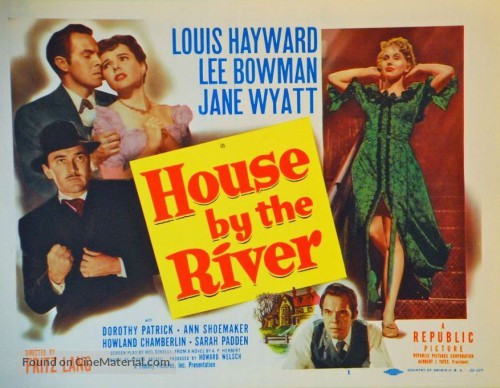
House by the River (Fritz Lang, 1950)

Falls under the category of movies I’ve had on my watchlist for a long time. Fritz Lang’s films always offer something of interest and this one has had a kind of rediscovery of late after a nice DVD presentation by Kino Lorber. A rich novelist kills his maid after she becomes inebriated and attempts to seduce him. The writer dumps the body in the river, shenanigans ensue. There’s a gloomy mansion, Victorian-era set decoration, murders, chiaroscuro and an avant-garde score by George Antheil. Sounds like something I’d prioritize at the TCMFF.


In a Lonely Place (Nicholas Ray, 1950)

Because I just watched this Nicholas Ray film and because it was one of the best things I watched in all of 2017, I think we should all have a chance to see this one the big screen. Humphrey Bogart plays a struggling screenwriter who may or may not have committed murder. Gloria Grahame supplies his alibi, but does she believe in his innocence? Beautifully shot and featuring two actors at the peak of their powers.


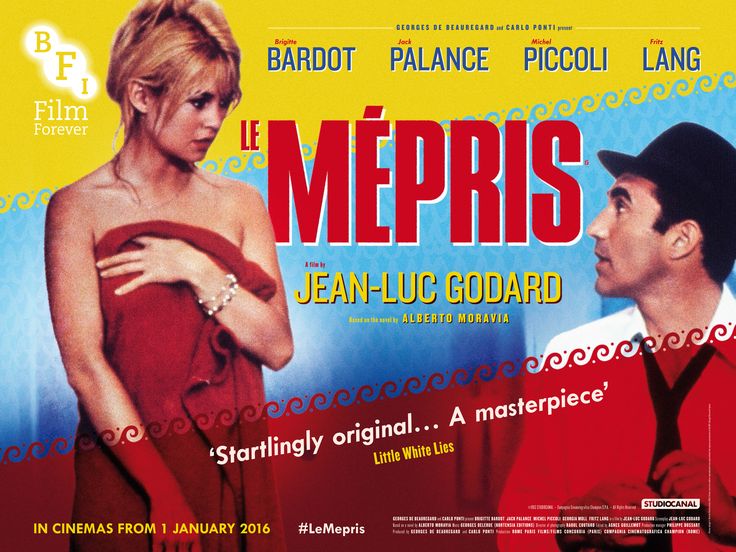
Contempt (Jean-Luc Godard, 1963)

This should become an entry on my personal Cinema Shame list. I’ve owned this Criterion DVD for as long as I can remember, and it still remains unopened. This just happens to fit our theme ever so perfectly. A genius playwright is lured to Hollywood to work on an adaption of The Odyssey by a “vulgur” producer played by Jack Palance. Plus Bridgitte Bardot. I tend to appreciate Godard when I get the opportunity to experience him in the cinema. Make it so.


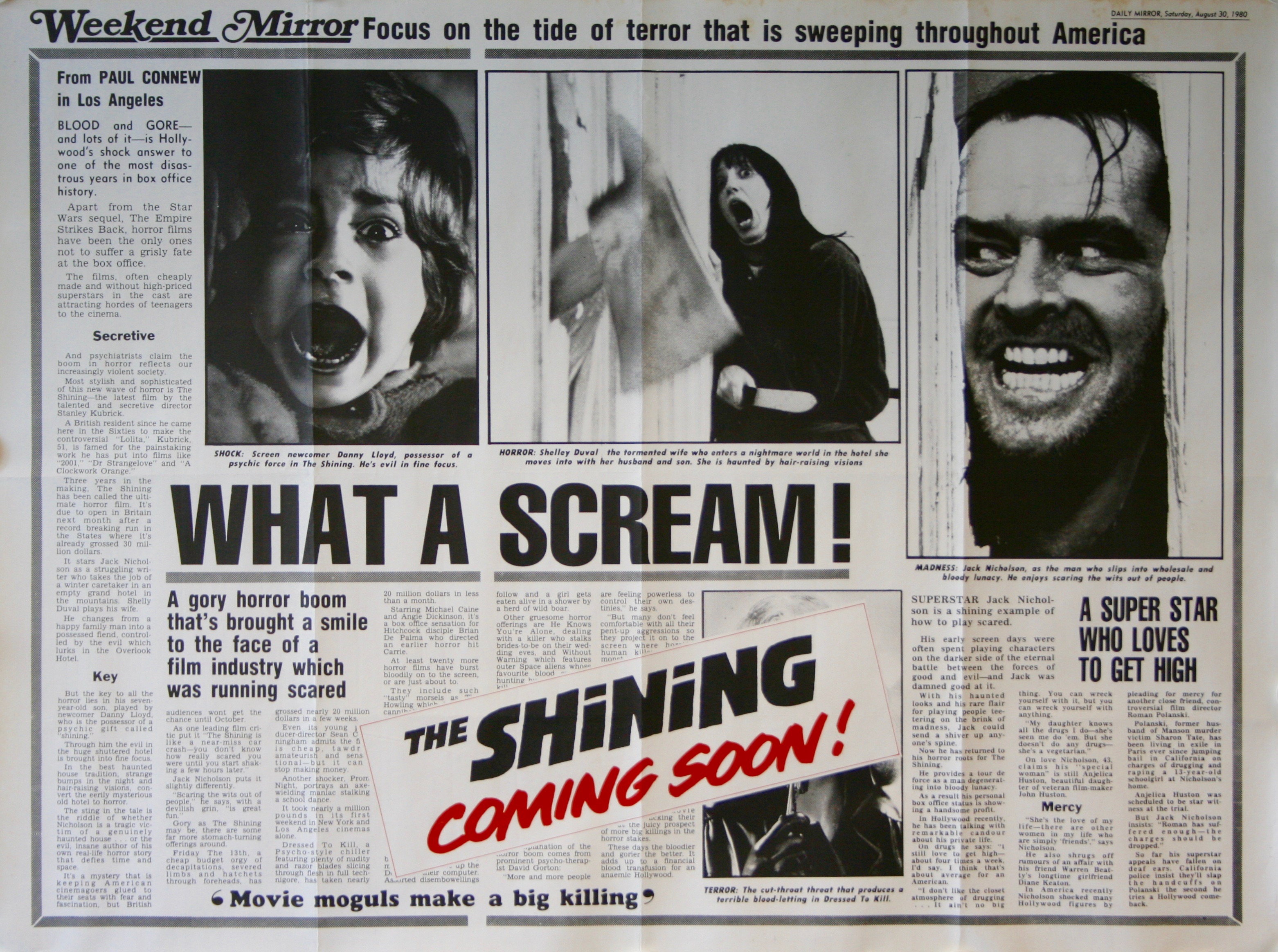
The Shining (Stanley Kubrick, 1980)

As I was considering films about writers that I’ve never had the opportunity to see as the Cinema Gods intended, my mind went straight to Kubrick’s masterpiece. An opportunity to see this at the Egyptian or the Chinese Theater would be a dream come true.


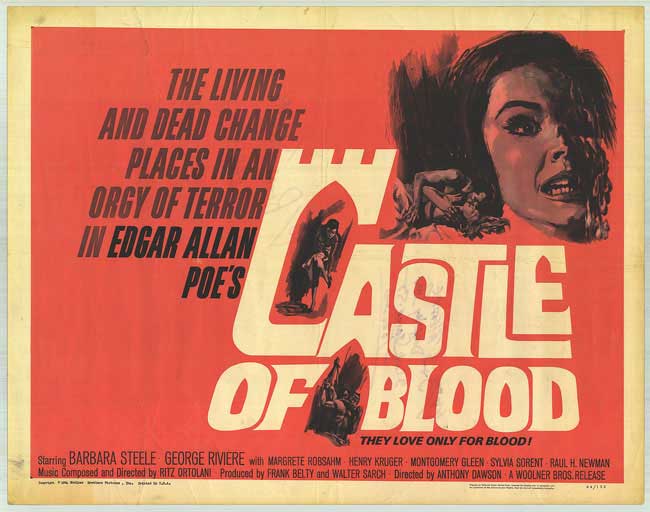
Castle of Blood (Antonio Margheriti, Sergio Corbucci, 1964)

And finally my writer-themed midnight movie. Castle of Blood features a writer spending the night in a haunted, gothic cathedral on “All Souls Eve” in order to challenge the legitimacy of the stories of Edgar Allan Poe (which in this film are presented as non-fiction). An example of the European gothic-style of filmmaking, Margheriti’s film may not be very scary, but his innovative camerawork and use of score makes for a highly entertaining slice of horror cinema. A Barbara Steele classic that should play well among TCMFF attendees — if they give it a chance. It’s style over substance and pure cinema over scares.


Categories
Cinema

Turner Classic Movies Film Festival Wishlist 2018: Anniversaries

I had some idle time in traffic this afternoon and my mind started to wander to the upcoming Turner Classic Movies Film Festival. TCMFF attendees get quite edgy the weeks before the final schedule release. To date we only know a handful of films — these can be found here. It’s a rock solid set of films, but nothing that sets my hair on fire. Not yet.

(By the way, passes still remain for the 2018 Turner Classic Movie Film Festival. If you feel like a trip to Los Angeles in late April, hurry over to the TCM page and pick up a pass today. It’ll be your best purchase of the year.)

tcmff 2018

Of those films I’m most excited to see my favorite Kurosawa, The Throne of Blood (1957), on a big screen and what I assume will be a 35mm print of The Taking of Pelham One Two Three (1974). The Set-Up (1949) also has some timely relevance because Raquel Stecher and I just discussed on a recent episode of Cinema Shame.

Still, I can’t help but consider the possibilities for what is yet to come. The theme for this year’s festival is Powerful Words: The Page Onscreen. We’re talking adaptations of famous works and writers. We’re talking movies about writers and landmark original screenplays. With that in mind, I let my brain ponder some potentials. What would I want to see with these parameters in mind?

Keep in mind I know absolutely nothing. Anything I guess here will likely not come true and anything I guess correctly will obviously be the product of true genius.

I’ll begin my frivolous exercise by considering big anniversaries. Which films do we have a monumental reason to celebrate? What are some films I’d like to see for the first time at TCMFF this year? Maybe some that just deserve a big screen?  Here’s my picks for an Anniversary-oriented Turner Classic Movies Film Festival Wishlist for 2018. 


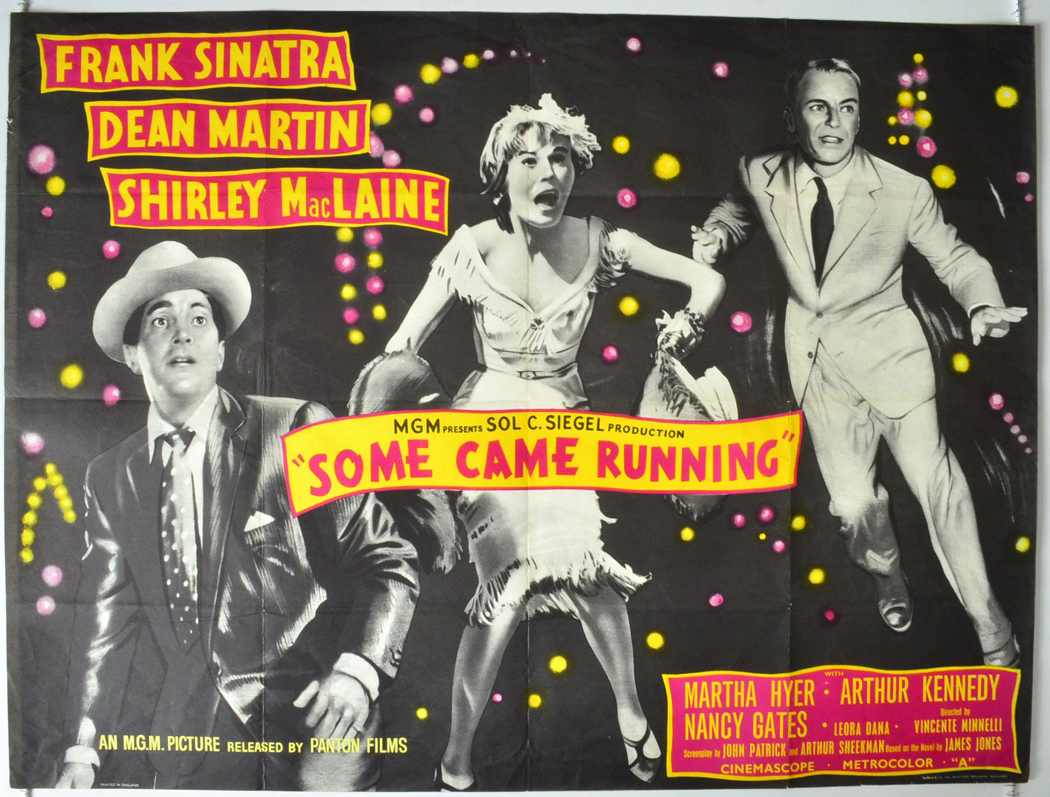
some came running

Some Came Running (Vincente Minnelli, 1958)

Frank Sinatra plays a drunk novelist in this drama also starring Dean Martin and Shirley MacLaine. Not only was this Sinatra’s first film with Dino, Shirley MacLaine earned her first Academy Award nomination. Shirley has attended prior Turner Classic Movie Film Festivals, why not another? I’ve been on a Vincente Minnelli kick lately, so I figure I should scratch this off the list, too.


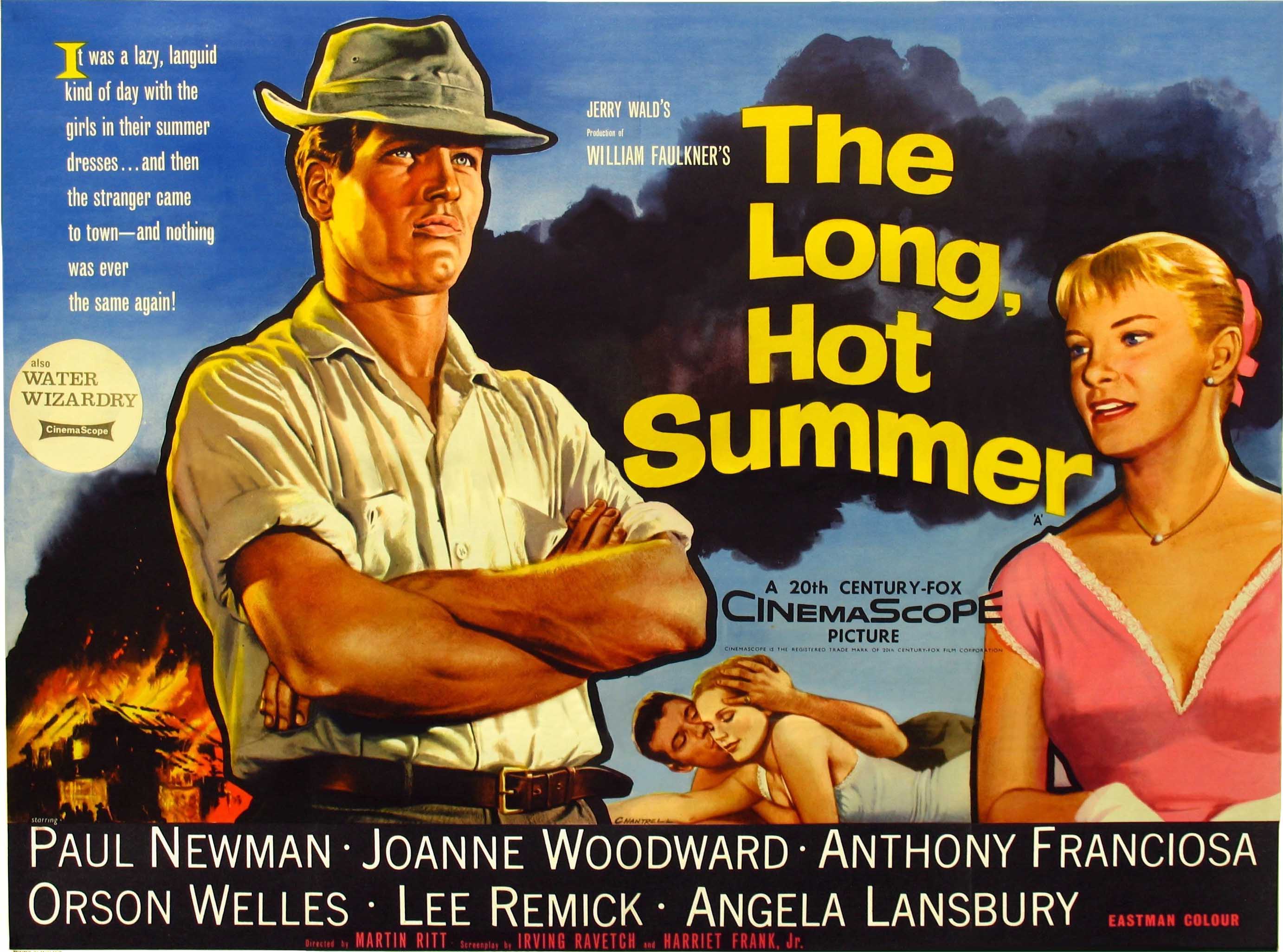
the long hot summer tcmff

The Long, Hot Summer (Martin Ritt, 1958)

Steamy Paul Newman and Joanne Woodward melodrama based on the short stories of William Faulkner. All that plus Orson Welles, not a bad scribe in his own right. Prior festival attendee Angela Lansbury. Lee Remick. The film re-established Ritt’s career after the Blacklist and fast-tracked Newman’s career. The title came from William Shakespeare’s Hamlet and some of the characters were inspired by Tennessee Williams’ Cat on a Hot Tin Roof. Authorial pedigree, you guys.


swimmer tcmff

The Swimmer (Frank Perry, Sydney Pollack, 1968)

Frank Perry’s excellent David & Lisa (1962) screened at last year’s festival. The Academy gave Perry a director nomination and his wife Eleanor Perry a screenplay nod for this film based on a short story by John Cheever. The Swimmer has received a bit of notoriety after a deserved rediscovery upon the release of the Grindhouse Blu-ray. I’m sure festival patrons would be thrilled to “discover” this Burt Lancaster great for themselves. If we’re talking unique and original voices, this film surely fits the theme.

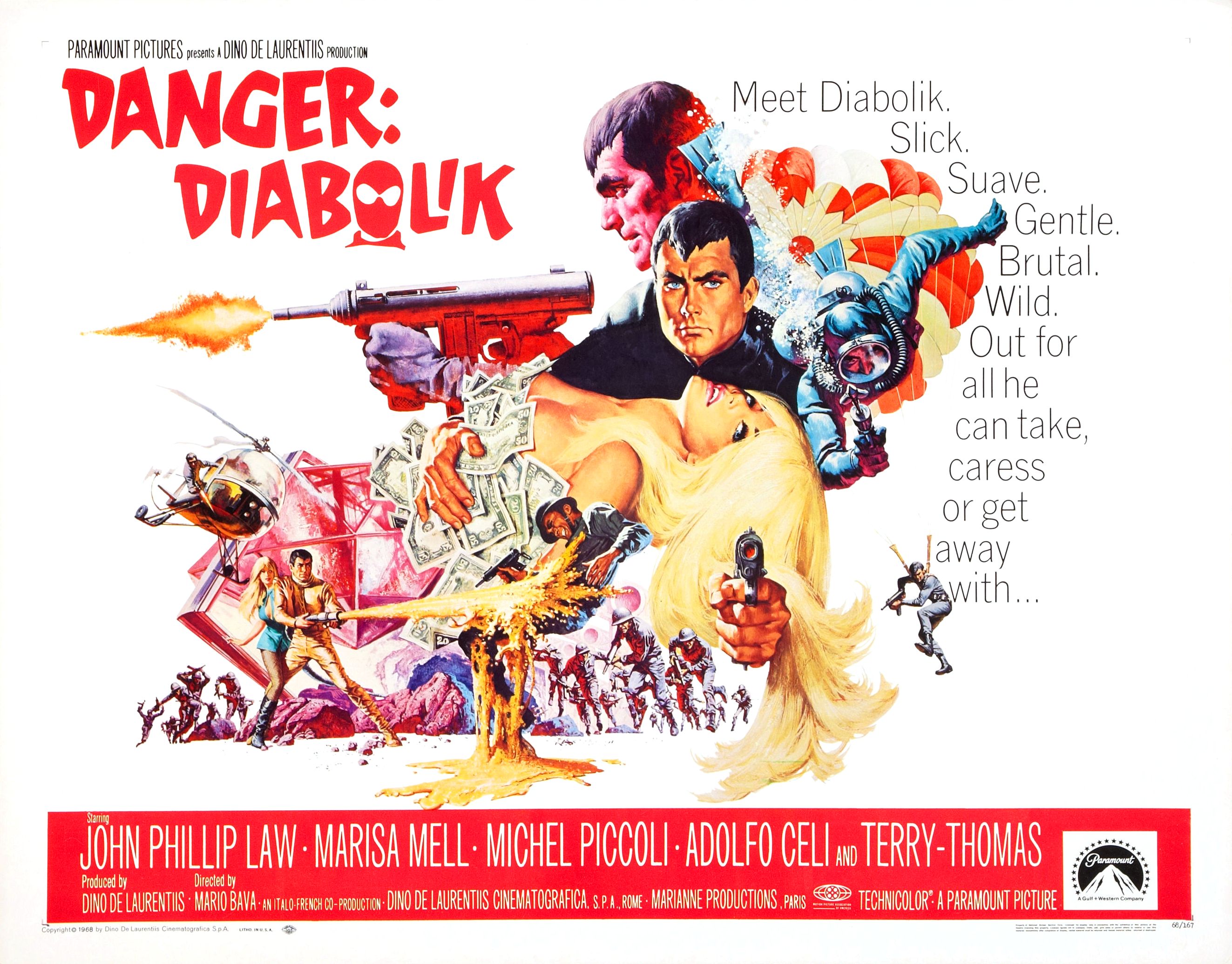
danger diabolik tcmff

Danger: Diabolik (Mario Bava, 1968)

If I could make one festival request, I would wish this upon everyone as a midnight screening. Not that it wouldn’t play well at any other time, but a midnight screening of Danger: Diabolik would tear the roof off of the Multiplex. I can’t make a connection to “Powerful Words,” except for the fact that it came from a series of Italian comics called Diabolik from  Angela and Luciana Giussani.


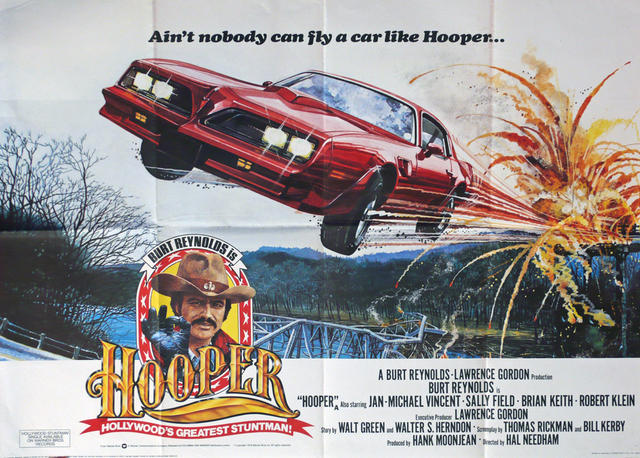
hooper tcmff

Hooper (Hal Needham, 1978)

Notable for it’s gonzo stunts. Plus Burt Reynolds, Adam West and Sally Field, and I must always hope for a Burt Reynolds film. This would go over really well with a jazzed-up classic film crowd. Fits into the writing category ironically. No writers were needed for the making of this film — yet four are listed in the credits. Maybe Peter Bogdanovich could attend to discuss the Roger Deal character — who was apparently intended as a Bogdanovich spoof.

All that said, what do I know? And per usual, the best and most exciting films at the Turner Classic Movies Film Festival are the ones I didn’t know I wanted to see in the first place. I look forward to what TCM has in store for us… but I really wish they’d take the Danger: Diabolik request into consideration.

Please.

Cue Morricone’s opening theme: