Categories
Album Rumbles Music

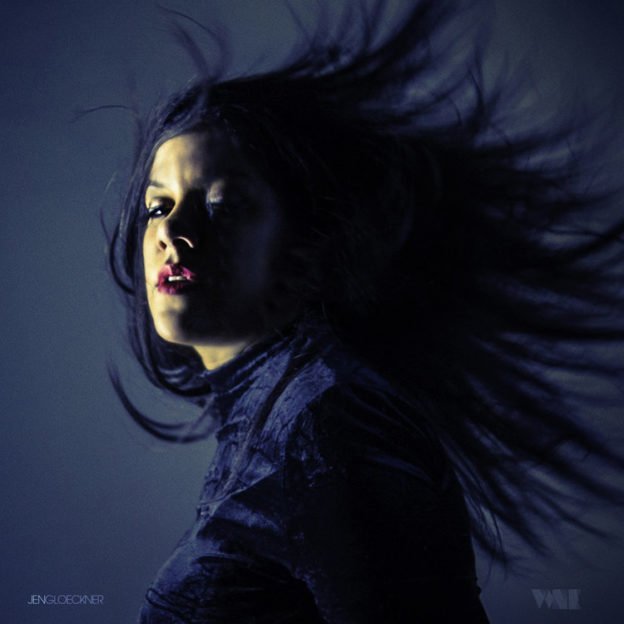
Album Review: Jen Gloeckner – Vine

I don’t often post contemporary album reviews on the Rumble, but when I get offers of review copies of Jen Gloeckner records on vinyl I must reconsider. If you’re confident enough to splurge for the vinyl shipping costs, this is something that deserves a listen. Now that I’m spinning vinyl, it fits my page’s modus. So let’s continue.

jen gloeckner vine

Iowa’s Jen Gloeckner understands something that most artists can’t quite grasp. Pace and patience. Beware the record that opens with its best offering and follows with a steadily declining parade of grandstanders. For whatever reason, album construction hasn’t fully freed the shackles of the listening post. Ahh, yes. Recall the days when a music stores stuck towers or walls of headphones at the front of the store, ensnaring passersby with the allure of fantastic new music? Before the days of Spotify and streaming and unlimited access, listening posts were just about the only way to indiscriminately sample a new album. I also had a love affair with Blockbuster Music, who allowed you to sample any record in the store, but that is a reminiscence for another bl-g post.

Vine opens without fireworks, the album’s titular track lays downtempo groundwork with an electronic landscape. Digital seagulls, a sea breeze, Gloeckner’s sultry vocal bandwidth. It’s a perfect tease, something more than an intro but less than those listening post thumpers that hoped you didn’t listen beyond three songs. Gloeckner brought me back to the late 1990’s when trip-hop, breakbeat, and acid jazz ruled my 25-disc CD changer. We could also discuss the patently absurd “post-trip hop” categorization, but I’ll refrain from that micro-genre nonsense.

Sample Morcheeba’s “Big Calm” for a reminder of what 1998 sounded like:

The music of Massive Attack, Morcheeba, Lamb, and Tricky didn’t disappear; like most other sneakily-influential genre movements it become assimilated into pop music as prominent artists like Madonna, Janet Jackson and U2 claimed it in the name of progress. Radiohead perfected the merger. With the exception of perhaps Massive Attack, original artists slipped further into the underground. Albums like Doprah’s otherworldly Wasting from 2016 prove a receptive audience remains for downtempo music featuring scattered bpms, sampling, electronic layers and ethereal vocals.

On Vine, Gloeckner’s third full-length LP, she severs her already tenuous ties to the traditional singer-songwriter genre. 2010’s Mouth of Mars experimented with jazz and layered production. A standout track on that album, “Trip,” takes on all the elements of trip-hop without the otherworldly sheen that comes part and parcel with the inorganic roots of the electronics and sampling.

But back to pace and patience. Vine fully asserts its on “Firefly (War Dance)” — the trance instrumental second track on the album — by barging through the door with a tribal soundscape that would have slipped nicely into the backdrop Massive Attack’s Blue Lines. It’s not until the following cut, “Breathe,” that Gloeckner drops Vine‘s thesis statement. Muffled female orgasm, uneven drum machine cadence, synth, and droning guitar that tests the shoegaze temperature before scaling back to white noise.

Gloeckner seems less confident in the dream-pop entries “Ginger Ale” and “The Last Thought” that anchor the middle of the record. Amiable confections that fail to rise to the weight or evoke the same emotional resonance. This segment requires some pace and patience from the listenerVine‘s pendulum begins its return on “Blowing Through,” a loopy woodwind and string-laden waltz that foregrounds some “Enchantment Under the Sea” romanticism.

Vine finishes as strong as it opens. Starting with “Counting Sheep” the second half of the record ebbs and flows, successfully weaving what the press release calls a “Twin Peaks vibe” with ambience, progressive guitar work, electronics, and even the strains of Americana that dominated Gloeckner’s early work. The wonderfully trippy “Prayers” and the AM radio “Sold” stand out as B-side highlights.

Either this is an artist that finally tapped into her wavelength or she’s placed her trust in muse-like producers with clarity of vision. Perhaps both. Producer Brian McTear has worked with Sharon Van Etten, Marissa Nadler and War on Drugs, and a certain relative retrospective throughline can be heard in all of these acts. Contemporary fans will hear Lana Del Rey (with a slightly less bombastic, more controlled vocal range) while others, like me, will be transported back to a time when trip-hop soundtracked our lives.

jen gloeckner

Perfecting the atmosphere of a record is a tricky thing. Jen Gloeckner may not have quite defibrillated the genre of Mazzy Star, Morcheeba or Lamb on Vine, but she did the next thing. She reminded us that the threads of their music remain vibrant and relevant. She also reminded us that proper pace and patience require attention and that that investment amply rewards.
Categories
Cinema

The History of the Mummy Movie Monster

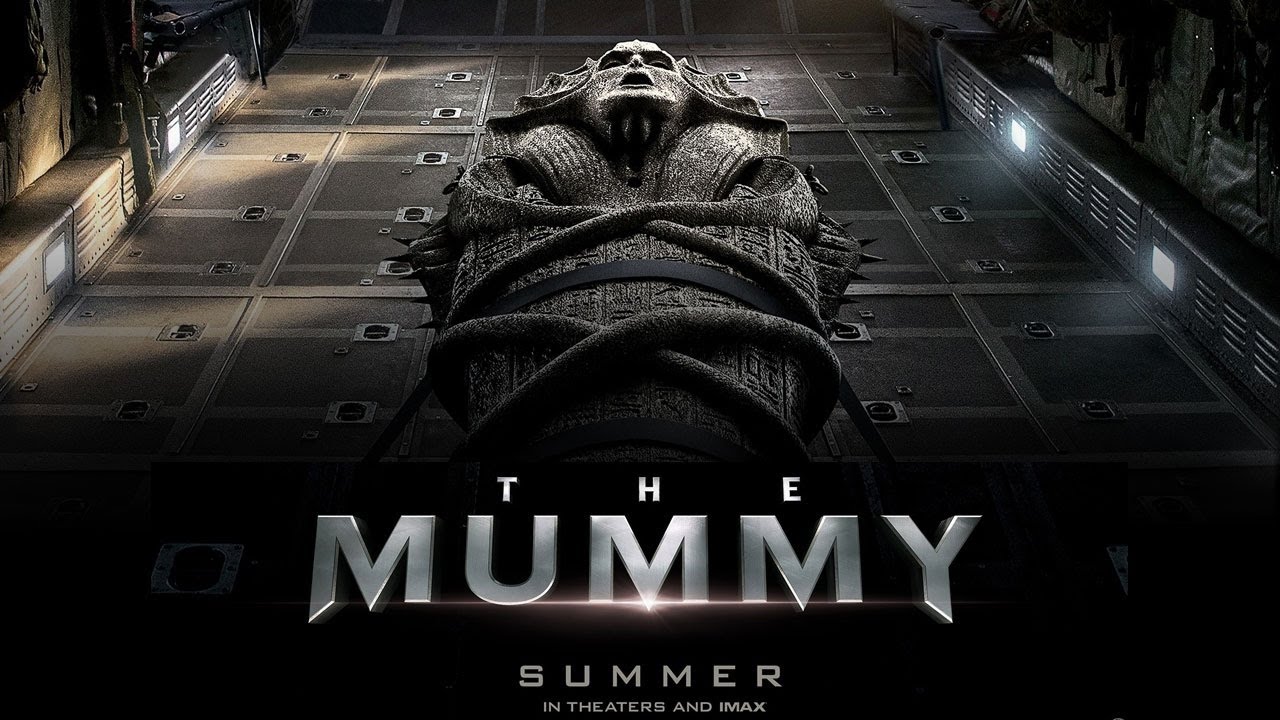
the mummy 2017 poster

During recent Stanley Cup Final broadcasts, NBC broadcaster Doc Emrick plugged The Mummy (2017) with the assertion that the Mummy has (and I’m paraphrasing here because I wasn’t taking movie notes about this Mummy article during a hockey game) “terrified and fascinated humanity throughout the millennia.” He’s of course making a glib, studio-prescribed sales pitch that highlights the fact that mummies are really old.

I love deflating these prosaic platitudes with darts of reality.

The History of the Mummy Movie Monster

To be more specific, the ad men are saying that the Egyptian mummification process first appeared on the historical record circa 3400 BCE – and “true mummification” using evisceration techniques (removal of the vital organs) began circa 2600 BCE. This means that these shrouded monsters officially began terrorizing fragile moviegoer constitutions starting around 2600 BCE! Clever!

The Mummy as a fictional monster didn’t appear, however, until 1932 during the first Universal horror cycle under studio founder Carl Laemmle and that of his wide-eyed and eccentric son and head of production Carl Laemmle, Jr. Even though Mummies time somewhere between the Blob and Zombies on their rates of attack, the cinematic Mummies in question didn’t literally take 4000 years to reach multiplexes near you – not even with Tom Cruise and his baggage in tow.

Instead of merely offering hokey studio taglines some side-eye, let’s look at the actual genesis for the Mummy monster. Even though the Mummy seems like such a natural villain, the journey from sarcophagus to movie immortality was hardly predestined. Three primary events came together at just the right time to inspire Universal’s wildly successful The Mummy in 1932.


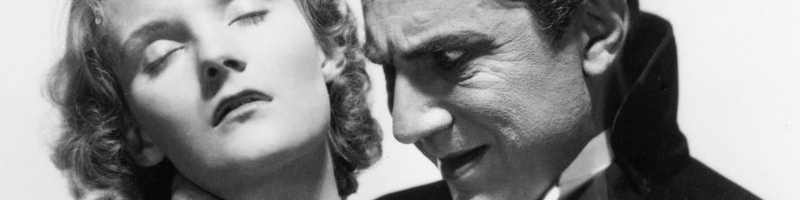
dracula 1931

The success of Dracula (1931).

German expressionism ushered in a new era of visual storytelling. Dramatic, high contrast cinematography, gothic surrealism and the ultimate import of these filmmakers, like Paul Leni, shifted the visual landscape of American film in the early 1930’s.

Few pundits believed American audiences were ready for a deadly serious, full-length supernatural horror film. At the time of its release Dracula was considered an enormous risk, despite the cultural acceptance of Bram Stoker’s 1897 novel into the public conscience. And although America had reacted positively to silent thrillers like The Cat and the Canary (1927, directed for Universal by the aforementioned import Paul Leni), Dracula would not pull back the curtain to reveal a trick ending or comic relief. Until now the “Scooby-Doo ending” had been a common tool to delegitimize the supernatural elements and release the viewer from the on-screen terror.


karloff the mummy makeup

William Henry Pratt, aka Boris Karloff.

One story suggests that James Whale’s domestic partner, David Lewis, saw the actor in the stage production of The Criminal Code and recommended him to Whale for the role of the monster in Frankenstein. At this point, Karloff had been toiling in Hollywood anonymity for about 15 years. Even at 5’11”, Karloff projected the physicality and provided a countenance that had been lacking in other actors testing for the part. Karloff plus John P. Pierce’s makeup equaled movie magic.

Variety called Karloff’s performance “a fascinating acting bit of mesmerism,” and the film went on to become the highest grossing film of 1932. Universal immediately wanted to find a new vehicle for the buzzy actor, billed then as “Karloff the Uncanny.” The studio went forward with a story by Nina Wilcox Putnam and Universal’s story editor Richard Schayer called “Cagliostro” about an immortal man who’d lived through many millennia. With rewrites by John L. Balderson (who’d written a stageplay called Berkeley Square that concerned a romance across the ages) based on recent events, the immortal European wanderer became an undead high priest of Ancient Egypt.


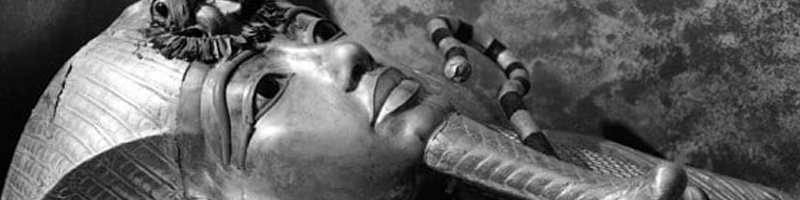
king tut 1922

The 1922 discovery of Pharoah Tutankhamun.

Archaeologist Howard Carter and financier Lord Carnarvon explored the Valley of the Kings in Egypt for more than a decade before finding the burial chamber of King Tutankhamun. The discovery ignited a very public obsession with Ancient Egypt. The King Tut craze inspired songs, movies, and the name of President Herbert Hoover’s Belgian Shepherd. The mysterious deaths of some of those involved in the tomb’s excavation resulted in the legend that has become known as the “curse of the pharaohs” – the perfect real-life fuel for cinematic nightmares.


The Rise of the Mummy

In the hierarchy of classic monsters, the Mummy often takes a backseat to Dracula, Frankenstein’s monster and the Wolf Man. Vampires are sexy. Frankenstein features the re-animation of parts from dead people using lightning. Lycanthropy even sounds snazzy and legitimately science-y.

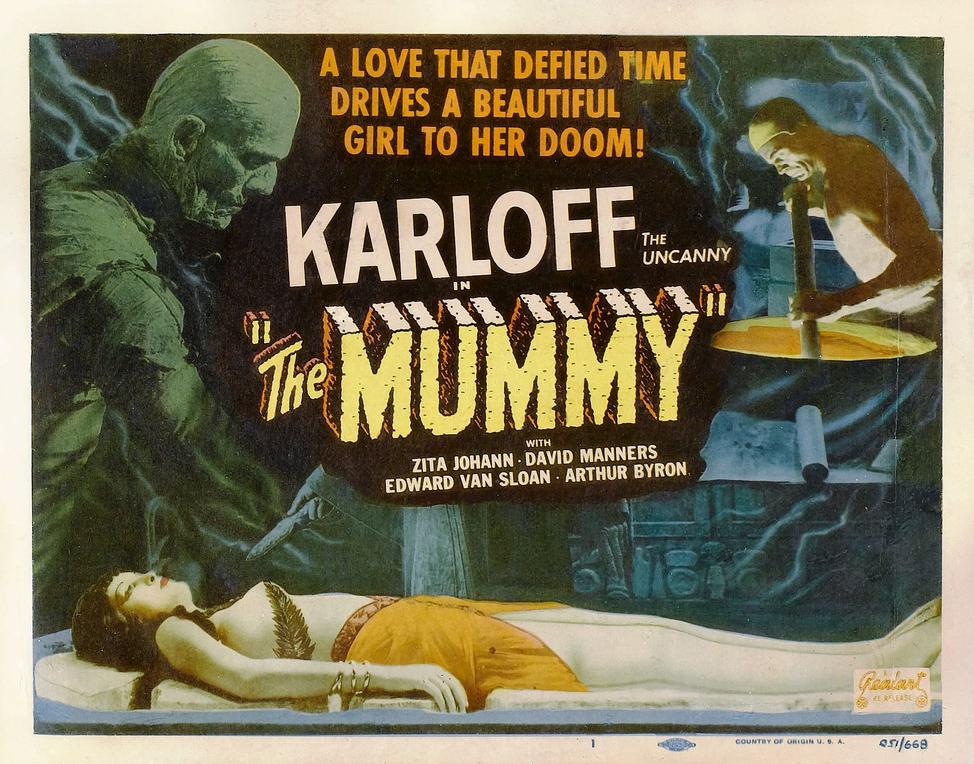
the mummy 1932 poster

The terror of the Mummy, meanwhile, took the form of a shrouded monster in raggedy bandages that wandered around (slowly) picking off those that dared interrupt his beauty sleep. (In many ways, the Mummy became a proto-zombie figure.) Someone inevitably doubts the legend and reads a forbidden scroll and so on and so forth. It’s all very formulaic and predictable – when you’ve seen one, you’ve seen them all. It’s not a stretch to consider the Mummy Universal’s least loved monster.

Now that I’ve sufficiently lowered expectations, let’s circle back so I can explain all the reasons why the Mummy became my personal favorite of the classic Universal horror franchises.

The makeup effects in The Mummy (1932) stand as one of Jack Pierce’s greatest achievements.

The Universal Mummy franchise lacked the dramatic highs of the Frankenstein series or the legendary countenance of Bela Lugosi, but consistently churned out a capable mixture of chills, romance, and eventually humor through six Universal-produced films between 1932 and 1944. Highlights include the elaborate and exotic set design, Jack P. Pierce’s painstaking makeup effects, and innovative variations on a narrow thematic bandwidth.

Like the other Universal horror films, The Mummy (originally titled Im-Ho-Tep) relied on mood and setting. There’s nothing face value terrifying about these films, but they burrow under your skin for reasons other than their fright-factor. As a kid the Mummy ignited my imagination in ways that the other movie monsters couldn’t. I’d dream of exploring ancient tombs or discovering spiritual artifacts that could resurrect the pharaohs. Meanwhile, I recoiled at the thought of dissecting a frog so no part of me wanted to deal with cadaver bits. And what kind of fresh nonsense was a man that turned into a wolf during a full moon? What about heavy cloud cover? And what would a lunar eclipse do to his disposition? For whatever reason, I’ve always found the Wolf Man a more problematic transformation than Gremlins.

The Mummy had magic, mystique and romance. Within the tattered bandages and decomposing flesh lived the beating heart of a romantic. The resurrected walking corpse almost always had love on his mind – the kind of timeless love that spans multiple regenerations. He’s really just a Romeo with an unfortunate hobby of homicide. Like the other monsters, he was just a little misunderstood.

Read my Countdown of the 10 Essential Mummy Movies to watch in preparation for the latest Mummy resurrection at Action-A-Go-Go.


To read more about the Universal Horror Monsters, I recommend the following books:

And in case you missed it, Universal just released the Mummy Legacy Collection on Blu-ray. 

Categories
30Hz Bl-g Cinema

2017 TCM Film Festival Recap

2017 TCM Film Festival Recap: The Year the Popcorn Went on Strike at the Egyptian

Past recaps: 2015 TCM Film Festival / 2016 TCM Film Festival

Each night in Los Angeles, I fell asleep listening to Julie Byrne’s excellent new record Not Even Happiness. The number of songs I’d hear each night decreased until, upon the third and final night, I finished nary a song. Did I even press play? If an album plays when no one lays awake to hear it…

That’s what the Turner Classic Movies Film Festival does to you – if you’re doing it right, it stretches you beyond the point of human exhaustion. Wring every ounce of blood from that gracious movie stone. It tests you. It brings you to the point of breaking. You’re tired physically – good luck getting on with a total of 8 hours of sleep over two nights. You’re drained mentally – after seven feature length films in one day, you exit that midnight screening of Zardoz beating your chest, yelling “IS THAT ALL YOU’VE GOT?!?”

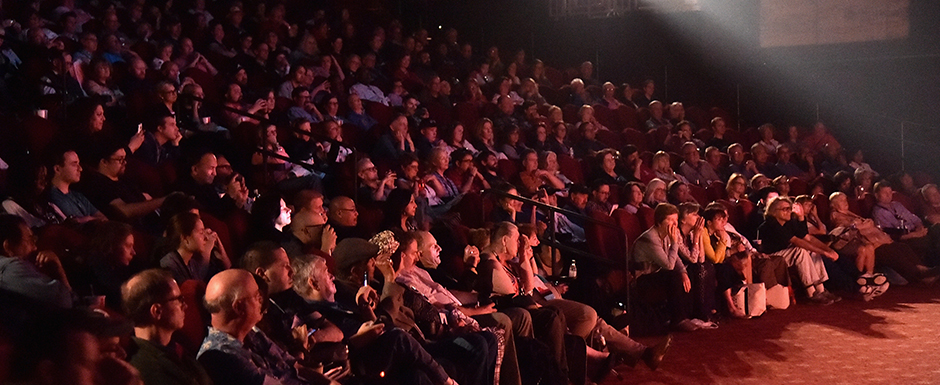
TCM Film Festival

Even though this test of endurance takes place once a year, each subsequent festival conditions you for the next. Sleep deprivation. Survival techniques. Making due with irregular and insubstantial sustenance. Remembering to pack emergency nut clusters.

At the 2017 TCM Film Festival I dozed off during only one film – High Anxiety – and survived both midnight screenings with nary a cat nap. I’ve found that a late afternoon lunch supplemented with a little popcorn  adequately nourishes the sedentary moviewatcher without inducing the midnight groggies. Which is precisely why I found this whole Egyptian popcorn strike so unsettling.

When asked about the case of the disappeared popcorn, Egyptian staff could only cite the prepared statement that the theater had just been renovated. Popcorn – that apparent defiler of classic cinemas – had become corna non grata. Only packaged items could be sold. You could only buy a packaged bag of popcorn. What brand of heinous trickery is this?

2017 TCM Film Festival #Bond_age_ Day 3 t-shirt

But back to the movie thing.

Each of the past two years, I’ve composed a letter to family and friends regarding my experience at the festival. The first time it happened organically while I waited for my departing flight to board. Last year I still had new feelings to enhance my original thoughts. This year? Meh. I’m running on instinct and repetition. I’m two days removed from the festival and rather well rested, having taken the afternoon flight home on Sunday to save myself the horrors of the red eye with a layover in San Francisco. So now, with sound mind, and a headful of clarity, let’s compose an obligatory message that lacks the bleary-eyed delirium of years past. Just imagine it on a really nice stationery to class it up a little bit.