
Categories
Music Vinyl

Crate Diving: Kids in the Kitchen – s/t

kids in the kitchen

Kids in the Kitchen – s/t

Place in Time:

Originally released in May 1985 in Australia under the title Shine, this self-titled debut for the Melbourne band Kids in the Kitchen hit the International market a year later with a different cover and sans the Shine title.

Vinyl Me:

I came across this nugget in a Half Price Books — the one with all the vinyl. If you’re a HPB shopper, you know there’s one in your area that gets all the interesting records. If you’re jonesing for some more Barbara Streisand or Kenny Loggins (and let’s be honest, who isn’t?) feel free to visit any of the others.

While my musical tastes skew in all directions, when I visit this particular shop there’s only one thing on my mind. Odd or interesting 1980’s selections. All I need to do is unearth a few before the kids lose their minds. I generally have 12 minutes. On this day, I had 9 before meltdown. Commence extreme crate diving.

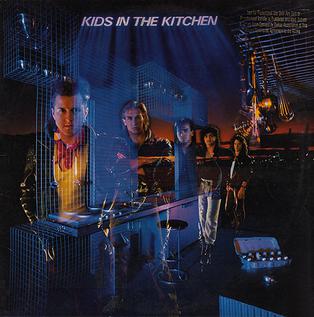
Normally by the time I hit the “K” section I’ve got a handful of prospects tucked under my arm and my daughters (ages 8 and 5) are moaning about being bored or asking me how far I think the 45s will fly. That means the fingers start flying faster and I might miss a gem or two. That Kids in the Kitchen cover, however, would not be overlooked. Bright yellow polo shirts? Red scarves? Smug new waveness or post-punk record label conformity? Are those a dozen eggs? Nakatomi Plaza? All bathed in the sickly neon streaming in through the “Kids in the Kitchen” monicker atop the sleeve.

It screams “the record label said we’d make bank if we sell ‘edgy’ but I’m really just thinking about that half-finished bag of Doritos at home in the pantry.” Also, “Cravats are itchy.”

Impressions:

The band definitely falls under the auspices of the angsty, synthesized shadow cast by new wave / new romantic bands such as Ultravox or Visage, but Kids in the Kitchen never met a Duran Duran groove they didn’t like. So while, lead singer Scott Carne likes to elongate his vowels to profess his depth and inner turmoil, there’s a poppier, commercial softness here rather than cold artificiality.

This is probably best represented by the band’s most successful track, “Current Stand,” which serves up a radio-friendly and potently hooky chorus, simple melodies and 1980’s sexy sax. Pure palatability.

The album’s first two singles “Change in Mood” and “Bitter Tears” promise more, perhaps, and would have rightfully qualified them as a band to watch — if they’d hung around long enough to evolve into something more interesting. Solid pop vocals and a pleasant blend of electronics and instrumentation only goes so far.

It’s not too surprising that the band got lost in the new wave shuffle despite registering Australian Platinum. They’re ear-friendly but overly familiar, especially considering this record didn’t reach U.S. or U.K. ears until the middle of 1986 — a time when this new wave had long since reached its peak.

The band splintered shortly after the release of this debut. The guitarist and keyboardist quit, and Kids in the Kitchen only released one more record, 1987’s Terrain before calling it quits in 1988.

Verdict:

The Kids stay in the Kitchen. As a relative oddity due to the fact that it never saw a CD release outside Australia, vinyl’s the only way to smell what the kids are (still) cooking. It’s not going to be a rotation staple, but I could see some “Change the Mood” cravings coming back around in time for a midnight snack.

keeper

Categories
Cinema Cinema Shame

An American in Paris: Cinema Shame

an american in paris 1951 poster

Best Picture Shame: An American in Paris

Cinema Shame comes in all shades; however, the most common variety likely has to do with well-known films that have just never presented themselves or been made a priority. I’ve never avoided An American in Paris nor have I ever made a point to track it down. I once recorded it on my DVR, but forgot to watch it. Considering the number of movies we “need to see,” many so-called essentials fall through the cracks.

For the Cinema Shame February prompt, the great minds at the Shame-Q (yes — myself included) loaded the table with unseen Academy Award Best Picture winners. All well known films, certainly. Some with more lasting power than others. I have a weekly Cavalcade (1933) Fan Club meeting every Tuesday, don’t you?

That’s an imposing list of 89 films — many of which I’m guessing are not high on anyone’s Watchlist. It’s also a fun bit of personal reckoning. How many Best Pictures haven’t you seen? (My answer is 30, which is far more than I expected and just patently unacceptable.) It also speaks to how often, time and tide re-evaluates and re-assigns value to these films. At best they live up to expectation. At worst, they’re a trace memory of a forgotten zeitgeist.

I scanned my library’s shelves for Best Picture Cinema Shame inspiration. First rack. First shelf. An American in Paris.

an american in paris gene kelly kids

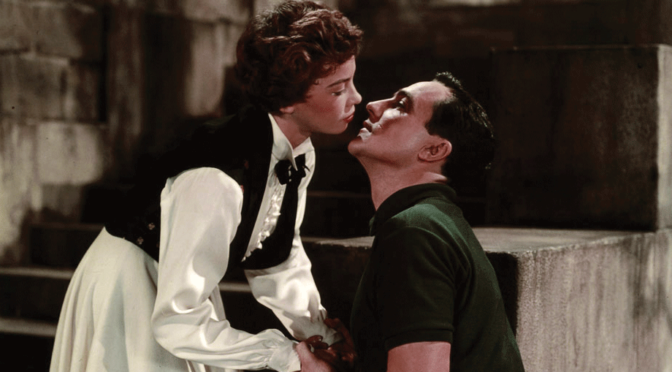
Knowing very little about the film itself other than the La La Land-inspiring finale, I went in largely blind — a pleasant change from most of my Shame viewings. Instead of a big, boisterous 1950’s musical, I found a small, wafer-thin narrative wrapped inside the serenity of Gershwin and the warm blanket of 1950’s Technicolor.

Gene Kelly plays Jerry Mulligan, an expatriate painter looking to enhance his reputation in Paris (#spoiler). His friend Adam (Oscar Levant), a struggling concert pianist hopes to launch a more profitable career (than tinkling the ivories in a lowly Parisian cafe) by working with the famous French singer Henri Baurel. Milo (an elegant Nina Foch), a lonely society woman takes an interest in Jerry’s work (and Jerry himself) and becomes a patron of his arts. Jerry, however, falls in love with Leslie Caron’s enigmatic store clerk Lise, complicating the patron/painter relationship. Further problematic: Lise’s engaged to Henri Baurel. Oh the tangled webs. 

an american in paris 1951

There’s plenty to love about An American in Paris, but the beauty’s found in smaller moments, the technical artistry of MGM in the 1950’s. Color. Set design. Photography. Gene Kelly’s athleticism. Small story. Big package. At least until the last reel when most everything comes together in a grandiose, twenty-minute finale, but we’ll come to that in a moment. The story doesn’t propel the film forward; there’s a sense of narrative listlessness as musical numbers pop in and out and occasionally arrest the film completely. All this plus some moldy 1950’s-era gender politics, contributes to some of the negative hindsight about the film.

And yet.

An American in Paris remains a charming and likable film, in no small part due to Gene Kelly’s natural charisma and Gershwin’s romantic score. Kelly, as ever, exudes joy. He is the embodiment of entertainment, selling every moment as if it’s the most fun/whimsical/romantic/downtrodden moment you’ve ever experienced. In the past I’ve seen that as both a strength and a weakness in his performance style. When it works, however, it’s magical — even if his pure strength and athleticism seems discordant with Minellii’s balletic symphony.

leslie caron an american in paris

Now, I must make a confession within a confession. This is the Russian nesting doll of Cinema Shame posts. I’ve never cared for Leslie Caron — but I’d never seen her dance. How is that I could have wandered the depths of classic cinema but avoided the one thing that made Leslie Caron magnificent. In An American in Paris I found her positively beguiling and I could not take my eyes off her.

I have no doubt that the finale swayed Academy voters. Outside the last twenty minutes, An American in Paris isn’t even in the Best Picture conversation. As I suggested earlier, the majority of the film is an MGM confection of big budget style over substance. Jay Lerner’s script failed to analyze the potentially complex and volatile relationships between Jerry and Milo or Herni and Lise.

nina foch an american in paris

Then again, dissecting what made Nina Foch’s patron of the arts the most interesting character in the film would have more fully humanized her and simultaneously raised difficult questions that the film wasn’t prepared to answer. It’s about true love, mon ami, and that’s all you need to know.  When a perfect, dramatic moment arises in An American in Paris, the conflict thaws and disappears just in time to preserve everyone’s happily ever after. Except Milo, who recedes silently into the background.

That said, sometimes happily ever after paired with something as magical and technically resplendent as An American in Paris‘ final reel is all we really want. The more easily that Milo slips into the background, the less we notice the frayed edges of that visual splendor.

cinema shame February prompt

Categories
Cinema First Watch

First-Watch Cinema Club: January 2018

I decided I wanted to blog more in 2018. I don’t know why. I’m already spread wafer-thin as far as time and energy is concerned. So we’ll make this quick and painless and just share some more love of classic and underseen cinema.

Hopefully, I’ll give a few items to add to your own watchlist — you can use them to fill out your Cinema Shame rosters. That was a shameless cross-promotion, mind you. Also a reminder to fill our your Shame Statements for 2018. You’re already late. Every month I’ll highlight my favorite 4 first-time watches. We’ll stick to Pre-2010 offerings to give these films time to recede from your memory.

First-Watch Cinema Club: January 2018

#4. Kid Blue (1973)

kid blue

Surprisingly low-key, often aimless Dennis Hopper vehicle boosted by a strong supporting cast including Warren Oates, Peter Boyle and a scene-stealing Janice Rule.

Looking positively svelte — some might say “gaunt” — in the role of Bickford Waner, Hopper plays a reformed (but inept) trainrobber trying to go straight in a town called Dime Box, Texas that wants nothing to do with him.

He stumbles in and out of menial jobs and eventually befriends Reese Ford (Warren Oates) and his wife Molly (Lee Purcell). The two form a strong bond, true bros, until Molly literally throws her knickers at Bickford and Bickford’s not a perfect man. Reese learns of the affair and severs the friendship.

Screenwriter Bud Shrake took great care in scripting this particular confrontation between Oates and Hopper — and the two actors, Oates in particular, have a meticulous way with damning silence. It was not his wife’s infidelity that has brought them to this point — but the betrayal of someone he’d known as a true friend.

Now an official outcast, casting aside any attempt at cultural assimilation, Bickford consults the other local outcasts (the Native Americans) about a little old-fashioned thieving. The unlikely gang attempts to take a pound of flesh from the society that has unfairly wronged them.

Director James Frawley (best known perhaps as the director of The Muppet Movie) allows this languid film to unfold without any agenda and only minimal genre-styled violence. This kind of thing only happened in the 1970’s — a character study with nowhere important to go. Foiled expectations for a Dennis Hopper western may turn some people off, but if you can survive the first thirty minutes or so, you’ll likely be rewarded with simple charms and an entirely unexpected moviewatching experience.

Kid Blue is available on DVD via the Fox Cinema Archive Collection.

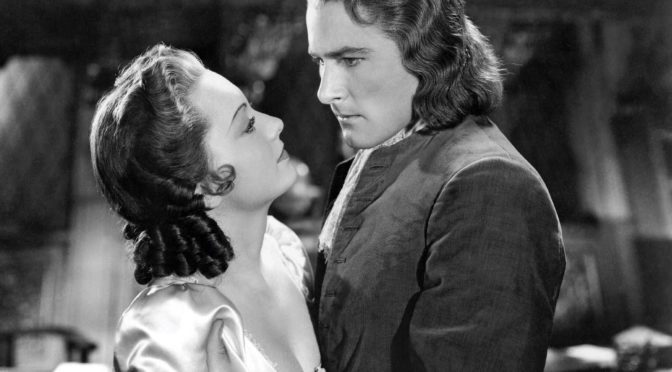
#3. Captain Blood (1935)

While the wife went out of town to visit her family in Santa Fe, my daughters and I set sail to the library to scope out some child-appropriate classic cinema.

My oldest daughter K (8), has just recently discovered a more adventurous moviegoing spirit (because unlike a fortieth viewing of How to Train Your Dragon, I will almost always grant a classic cinema request). She jumped at the opportunity to watch a movie with the word “Blood” in the title because that’s definitely not something mom would have approved.

I don’t know if she witnessed as much bloodletting as she’d hoped, but she was glued to the screen for at least the first hour or so. I attempted to explain Errol Flynn’s status as a piece of 1930’s man meat — and equate his popularity with the only heartthrob she recognizes as an 8yo in 2018 — Brandon Flowers (the lead singer of The Killers). It was a really loose analogy, but I think she understood. More problematic was explaining King James and his predilection toward torture and slavery. This was not a topic I anticipated explaining to my 5yo.

This classic Errol Flynn swashbuckler was one I’ve been meaning to watch for ages. My dad put a bunch of Flynn’s films in front of me at an early age, but this was never one of them. Errol swashed and buckled and fell in and out of love with Maria de Havilland and ran afoul a French scalawag played by Basil Rathbone. This French pirate version of Basil Rathbone might just be my favorite Basil Rathbone.

Captain Blood certainly didn’t undermine it’s status as a classic Errol Flynn swashbuckler, but it fell just short of personal favorites The Sea Hawk and The Adventures of Robin Hood.

Captain Blood is available on DVD from Warner Brothers.


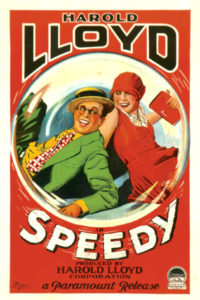
speedy harold lloyd#2. Speedy (1928)

A good Harold Lloyd film — but a fascinating portrait of New York City in 1928 from Coney Island to Manhattan. What they do with a wild chase through the city streets seems damn near impossible in 2018 or 1928.

This was another daughter viewing. I’ve been attempting to endear them to the classic triumvirate of silent comedians. Chaplin wasn’t a big hit at first glance, but Harold Lloyd seems to have struck a nerve, at least with my 5yo. She refuses to call him Harold Lloyd. As far as she’s concerned his name will always be Speedy.

Since Speedy, they’ve gone on to view a few of Lloyd’s short films, and while I have your attention for a minute can we talk about how dark some of those early shorts were? Lloyd’s character is always trying to kill himself after being spurned by a love interest. Explaining the humor in suicide is a difficult task. Luckily, Speedy is attempted suicide-attempt free and just a fun romp through New York city at breakneck speed on a horse-drawn trolley.

Speedy is available on Blu-ray and DVD from the Criterion Collection.


#1. Lifeboat (1944)

lifeboat

Checked this box on my 2018 Cinema Shame statement. Also look for this to appear on an upcoming episode of the Cinema Shame podcast. Consider this a preview of coming attractions.

Alfred Hitchcock’s Lifeboat is an exquisite technical achievement in filmmaking. A true showcase of a cinematic mind at the height of his craft. And then there’s Tallulah Bankhead’s resplendent performance anchoring the entire thing. See what I did there? Anchor. Lifeboat.

Like its single-setting sibling, Rope — Lifeboat takes full advantage of its claustrophobia and limited scope to focus on the frailty of the human condition and the latent ugliness beneath every facade. Hitchcock revels in a filmmaking challenge, and it often brings out the best, most subtle facets of his extraordinary ability. Whereas it’s easy to overlook the nuance in something like North by Northwest due to the film’s constant movement and action, Lifeboat highlights framing, juxtaposition of character, and the movement of actors within a frame.

This is a master class in close-quarters filmmaking. If you want to learn how to piece a film together with nothing but actors and a camera, single-setting Hitchcock is a good place to start.

Lifeboat is available on Kino Lorber Studio Classics Blu-ray.