
Categories
Cinema

TCM Discoveries Blogathon: Slither (1973)

 TCM Discoveries Blogathon – Slither (1973)

(Thanks to Nitrate Diva for the tremendous blogathon idea and apologies for forgetting to post my bl-g on time!)

Slither TCM Blogathon

For many moviegoers the discovery of a new favorite movie makes for an immediate, impromptu holiday-type celebration. How often can one admit a new viewing into the hallowed halls of all-time favorites – those 100 or so movies that give us the most pleasure in this crazy, mixed-up world. I’ve even documented that list on Letterboxd.com for sharing and comparing. (Go on… share yours, too!) The pursuit of that next underseen or underrated gem consumes us and drives us to watch more and odder movies. We read Underrated lists on rupertpupkinspeaks.com and share buzz on Twitter, forever adding to our rapidly growing and now unwieldy watchlists. We haphazardly scan the TCM listings for an oddity from a favorite star or a plot summary that hints at greater or perhaps at least more unusual things. DVRs clogged up with dozens of hopeful causes to celebrate if we can only watch them before they get deleted by the pending episodes of Blacklist that we also probably won’t watch, but DVR anyway because James Spader.

I dare you not to DVR my show.

For decades now, Turner Classic Movies has been a tireless source of old standards (someone at TCM sure loves Now, Voyager) alongside a spare selection of late night oddities, flicks that are rarely or not at all available on home video. I don’t know what I’d do without the fine individuals in my Twitter timeline that make a point to mention when something fantastic pops up on the Turner Classic Movie schedule. So it happened when Slither aired earlier this year. I wish I could thank those responsible parties that tweeted notices about the James Caan/Peter Boyle “road-trip” movie. Sadly, however, their good deeds have been lost to the Twitter tide. I’d not once heard about the film (or director Howard Zieff at the time). I’d later learn that Zieff directed childhood favorites Private Benjamin (1980) and The Dream Team (1989) starring Michael Keaton, not to mention My Girl and My Girl 2. But I’ve no inclination to dwell on Howard Zieff’s forays into melodrama in this particular conversation. (Though how great is Anna Chlumsky on Veep?)

Slither belongs to that group of films that “could only have been made in the 1970s.” And the more of these supposed “lesser” films I watch, the more I learn that the decade begat a cynical, anomalous genre of comedy unlike anything before or since. Aimless, pedantic and boasting the forward progress of a cat chasing its tail, Slither left an indelible impression not just because it’s funny as hell, but because it completely undermines the fundamentals of traditional narrative.
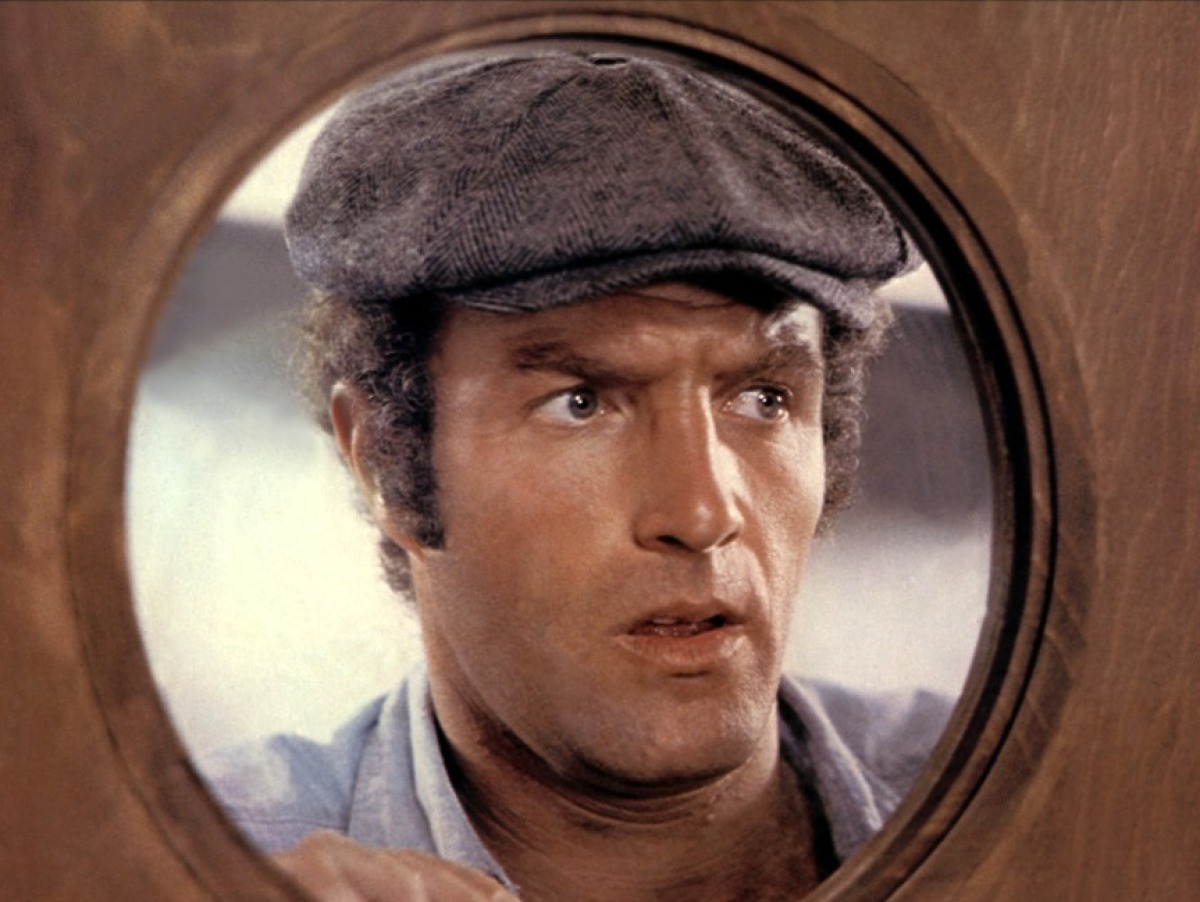
James Caan Slither

A bumbling thief Dick Kanipsia (Caan) gets out of prison on parole. Though he aims to “go straight,” he goes to visit his friend Harry, a friend he knows is likely up to no good. While there, some villainous goons shoot up Harry’s house. With Harry’s dying words, he tells Dick to go find Barry Fenaka. Fenaka can tell him where to find a whole mess of cash. Dick flees and hitches a ride with free spirit/nut jub/borderline sociopath Kitty (the always welcome Sally Kellerman). As Kitty’s natural tendencies toward batshit crazy start to leak out, Caan ducks out the back door (literally) and catches a passing bus. Only when Dick finds Feneka (part-time bandleader at the VFW) does the story gain a measure of clarity. Many years ago Harry and Feneka embezzled money and then paid a guy to stash it for them until the heat disappeared. By this point in the story, it’s clear that no one involved is a criminal mastermind… or really very bright at all. Dick, Barry and Barry’s wife hop in an RV and set off in pursuit of the man named Holdebrook, the man with the key to their cash and happily ever after. Eventually Kitty catches up to Dick (she’s been tracking him, of course) and a creepy black van (maybe vans?) stalks the brain trust as they continue their march toward certain fortune.

James Caan and Sally Kellerman Slither

It’s also an uneven machine that runs in three to four gears at once. It opens with violence, devolves into a lazy, comic chase and concludes on a note of existential serenity. At the time of the film’s release, Zieff was best known as the creator of Alka Seltzer (“Mamma mia! That’s a spicy meatball!”), Polaroid and Volkswagen commercials. His strength at self-contained 30-second spots carries over into this, his feature film debut. (In 1969 he sold his advertising company to Columbia Pictures in order to pursue filmmaking.) Slither‘s staccato orchestration feels like episodic quandaries all heading toward a predetermined fate. There’s an unpredictable rise and fall that keeps the viewer invested. Meanwhile Slither never wastes time explaining the gaps between. Zieff would rather move along down the road, searching for the next natural pratfall or comic caper. As a result we’re gifted a Peter Boyle MC’d event at veteran’s hall, a Bingo night gone wrong, a state-of-the-art camper demonstration, a shoot-out that obliterates a vegetable stand, and a cop giving Sally Kellerman a lecture about driving barefoot.

If you’ve seen enough of these types of films from the 1970’s, you’ll know that no one walks away from this movie happy. Slither never bothers to wrap the narrative up in a tidy little bow. In fact, Slither seems to revel in keeping the audience at a curiously callous distance. All of the characters are gregarious but unsavory in the most civil fashion. It ends as a meditation on how people can’t escape their nature. James Caan, the perpetual screw up, despite his best intentions, will only succeed at screwing up again and again. (True to form, I, perpetually five minutes late to every appointment, have posted this bl-gathon entry three days tardy. I have legitimate excuses, honestly. They’re 3 years old and 6 years old and they’re causing my brain to atrophy, one dogged day at a time.)

Slither 1973

What’s easy to overlook is the actual craft of the film. Photographed by the late, great László Kovács (Ghostbusters, Easy Rider, Five Easy Pieces), Slither, in any other decade, would have been a tossaway comedy, if it’d even been made at all. A goofy, road chase movie photographed by one of the great cinematographers of the 60’s and 70’s? That’s weird. Can you imagine Roger Deakins or Janusz Kaminski shooting Due Date?

After finding myself deliriously entertained by Slither, I’ve sought out other bleak comedies from the 1970’s. The obscure Rafferty and the Gold Dust Twins starring Alan Arkin (and Sally Kellerman again) as an alcoholic driving instructor, for example, which also aired on TCM. If not for Turner Classic Movies, I wouldn’t have found either of these rare cinematic treats that have become part of the network’s extended definition of classic films. While I know this has been a taboo topic – the expanding “classic” umbrella of TCM – I welcome the opportunity to view worthwhile films from any generation.

Nothing Lasts Forever - 1984

In my opinion choosing the unreleased Nothing Last Forever (1984) to air as part of the TCM Underground schedule was one of the most important programming choices of the year. Just as “Oldies FM” progresses to include the likes of David Bowie and Queen, the definition of classic film must also expand. Without that extra decade of classic status bestowed upon the 70’s and 80’s, I wouldn’t have likely seen Slither nor would TCM have renewed the buzz around a 30-year-old film left to perish a death of anonymity. Where’s the justice in this world when a truly interesting film featuring Bill Murray, Dan Aykroyd, Zach Galligan, Eddie Fisher and Imogene Coca remains anonymous and unwatched? Who else is out there on that wall to make sure that doesn’t happen? We as enraged, hyperbolic viewers can only do so much. Here’s to hoping that TMC continues to air quirky, fascinating and oddball films like Slither and Nothing Lasts Forever even if they don’t fall under proper “classic” status. While I do enjoy a good Bette Davis flick (…speaking of which I wonder when Now, Voyager will run again… oh good… it airs on September 30th at 10pm ET. I was worried.) like anyone else, I also love the opportunity to discover something new, something different, something that might just become a new classic if we give it a chance.


TCM Discoveries Blogathon


Categories
30Hz Bl-g

Echo and the Bunnymen @ Mr. Smalls 9/17

IMG_1429

Some nights turn out shit. It’s an inescapable law of the world. “The best laid plans of mice and men” resonates for a reason. Still, I had a feeling about last night before it even began. I hadn’t been to a show in ages, yet I was looking for reasons to stay home. Not that I had anything particular to do. Maybe laundry. Killing flies for my wife… as this is apparently how she spent her evening of solitude… with a rolled magazine and white hot rage.

The great Mr. Smalls Funhouse venue is located in an old church in the Pittsburgh hamlet of Millvale. Millvale is a sleepy little enclave, going completely dark by 8pm… except when there’s a show at Mr. Smalls… and/or when the entire planet seems to converge on the town under the name of festivities called “Millvalle Days.” Millvale Days are a three-day festival where people prone to being drunk wander the streets, eat kettle corn and listen to Skynard cover bands. Someone ultimately stumbles on the uneven pavement and requires medical attention. It’s a scene, man. And every year I seem to attend a concert at Mr. Smalls during Millvale Days.

Combine Millvale Days with a sold out concert and you’ve shaken the powder keg. The main street is blocked off, thereby rendering half of the town’s parking inaccessible. Far away side streets, shady back alleys next to dumpsters and cars on blocks and illegal parking become the primary alternatives. After circling the illogical streets of Millvale for more than twenty minutes I settled on a 1/3rd legal parking spot, a spot that was far more legal than at least a dozen other parking jobs I’d already passed. I calculated the odds of a police person having enough time to rip tickets for the more egregious offenders before hitting the secondary offenders before the end of the show. I felt good about my chances.

So. Echo and the Bunnymen. I arrived just in time to grab a DogfishHead 60 Minute IPA and sidle up in a spot toward the rear center of the venue. Don’t get trapped under the new balcony, by the way, Mr. Smalls attendees. Echo opened with “Crocodiles” — the title track from their debut record. This introduced a block of songs that an average listener probably didn’t recognize. The earliest and the latest tracks — speaking of which, apparently Echo released a record last year. Who knew? And if you knew, why didn’t you tell me? Anyway. These were the tracks for the fans, tracks made us all anticipate the anthemic moments that were still yet to come. As much as I enjoy these early Echo tracks, they’re not the huge crowdpleasers. They’re not the tracks that incite spontaneous sing-a-longs and fuck yeah fist pumps. They’re welcome headnodders.

Ian McCulloch’s voice rang true as he hovered stoically at the center of the stage. A little more gravelly and aged, a weathered gate worthy of his 56 years. After shaking the rust, he sounded shockingly similar to the recorded tracks that by now feel etched into the stone tablets of our minds. But it wasn’t McCulloch that ultimately brought the crowd fully into the fold. Will Sergeant’s instantly recognizable guitar riffs catapulted the sold-out throng to life during the first moments of “Rescue” and then later when Echo launched into that string of mega hits, beginning first with “Seven Seas.”

McCulloch rarely opened up the proceedings for levity. He remained the angsty twenty-something raging against the dawn, a rare treat for fans of classic bands that have long since put aside the angst for a more age-appropriate level of placidity. He stood at the front of the stage, always in sunglasses and often cloaked by the shadows of the rear-lighting. He’d sing a block of songs before pausing to introduce another, his Liverpudlian accent and microphone reverb rendering all such words unintelligible.

For what reason has Echo and the Bunnymen fallen into relative anonymity? This is the question that began rattling around in my brain. They’re often compared to a band like The Psychedelic Furs. Post-rock. Jangly guitars. Brooding frontmen. Is it because the Furs contributed a song to the Pretty in Pink soundtrack? Their legacy endures because of the synesthesia nostalgia associated with Molly Ringwold and Ducky? If you type  “Pretty in Pink” into Google, it will suggest an autofill of “Pretty in Pink song” above the autofill for just the name of the movie. In my mind, Echo looms large over the 1980’s. Am I wrong? Have I been misled? If Duran Duran and The Cure are like the A-list of sometimes brooding, influential post-punk bands of the era, Echo feels like an A-/B+. Though I came around to Echo shortly after their peak, I vividly recall a time as recent as the late 90’s where everyone who knew music knew Echo and the Bunnymen.

When Echo announced this show at Mr. Smalls, I hopped online, day one, and bought a ticket. I figured this would be a hot ticket, a much ado about something in Millvale on September 17th. After all, when the hell had Echo last played Pittsburgh? Not during the 13 on-and-off years I’ve lived here.

A college kid that did some housepainting for me over a couple of days this summer really knew indie music. We engaged in many conversations. He asked about any upcoming shows I had on my docket. I mentioned Delta Spirit. I then added, with much enthusiasm, that I’d snagged a ticket to see Echo and the Bunnymen! Cool, right? Echo and the f’ing Bunnymen!

He stared at me blankly. The same guy who’d browsed my record collection, calling other 80’s-born records with admiration. Though we listened to the exact same music, followed the same modern bands, he had no idea about the Bunnymen. I never blame anyone for not knowing a band. Unlike some maniacal music fans, I do not take offense when someone’s frame of reference does not overlap my own. I was just confused. I knew… well, I thought I knew that Echo and the Bunnymen still resonated. You can’t turn on more than 20 minutes of college radio without hearing the influence of Echo and the Bunnymen laced throughout that amorphous genre known as “indie-rock.”

It’s time to start a public service movement. Introduce someone you love, someone you want to grow as a human, to Echo and the Bunnymen’s Porcupine or perhaps Ocean Rain. These are the gateway drugs. Once they proclaim their affection, keep going back to their debut, Crocodiles. Standing in Mr. Smalls on Thursday, seeing this mass of sold-out humanity moved once again by these songs reminded me just how essential Echo remains. Spread the word, Echo never really went anywhere; they just don’t remind anyone of Andrew McCarthy’s bitchin’ hair.

Lucky for me these epiphanies occurred during the show. Appreciation. Admiration for a band continuing on despite waning popularity due to time and distance. Remember when I said that some nights turn out to be kinda shit? Well, I skipped out of Smalls, on a nice post-show buzz, hopped it my car and headed home only to find out that the city of Pittsburgh closed the southbound tunnel. After 80 minutes of stop-and-go traffic around the damn mountain, I finally arrived home. Carnivals and closed tunnels. Semi-legal parking and ambient Skynard covers. A 4-hour round trip for 90 minutes of Echo.

So worth it.

photo by Justin Gill. This image pretty much sums up Ian McCulloch.

Sidenote:

I’ve never seen such a bizarre and bountiful collection of facial hair at one show. Is odd or distinctive facial hair the new midlife crisis? I saw Rollie Fingerses, Magnum, P.I.s, Johnny Fevers, Goose Gossages. I saw beards of all widths, girths and ineptness. I saw handlebars and fu manchus, braids and mutton chops. Instead of documenting the show I felt compelled to document the litany of notable facial coifs. A truly notable assemblage. Hence, the noting.


Categories
Cinema

Underrated 1975

Underrated 1975

originally published on rupertpupkinspeaks.com

underrated 1975

Jaws. One Flew Over the Cuckoo’s Nest. Nashville. Dog Day Afternoon. Rocky Horror Picture Show. Monty Python and the Holy Grail. Barry Lyndon. Also consider the quality of the B-pictures and exploitation flicks also released in 1975. Rollerball. Death Race 2000. A Boy and His Dog. Argento’s Deep Red. Just a massive list of amazing films, a banner year for fans of cinema. As I was scouring the list of films from 1975 I found it rather difficult to assemble a list of movies that weren’t highly regarded by some faction or another. Would another vote for Doc Savage: The Man of Bronze as a guilty pleasure really matter in the grand scheme of things? Rather than stare at this list any longer I settled down in front of my own DVD shelves, checking dates, searching for some 1975 gems without the aid of some arbitrary movie site’s rankings to help me decide which films were underseen or undervalued. I found about 12 that fit the bill. I whittled that list down to these following five… plus some bonus picks all the way down at the end because I just can’t help myself.


Rancho Deluxe (dir. by Frank Perry)

I don’t know what they shot this steer with, but they blew a hole in him big enough that you can throw a cat through.

Rancho Deluxe has all the makings of a cult film without any of the ballyhoo. This is the decadence of the traditional cinematic Western. Why doesn’t Rancho Deluxe get its due hyperbolic praise? Perhaps the film lacks a specific genre. It’s part teen comedy, part satire, part Western dystopia viewed through the sepia-colored nostalgia that still romanticizes the ideologies of the Old West.

Through the perspective of two young Montana misfits (Jeff Bridges and Sam Waterston), Rancho Deluxe views the West as a comedy of overidentified ways and means. The cattle farmers and ranchers living high on the hog from merely “showing bulls” and reveling in their pre-existing wealth (without actually doing any farming). So bored that they’re hunting petty cattle rustlers because they’ve got no other way to fill their days. The youth growing up in this modern frontier without education or potential employment torment the cattle barons “for sport.” There’s a brothel scene, pot smoking, very un-PC bits of dialogue (Mexican Overdrive = neutral), the old steer in the motel room gag, and a conversation filmed only in the reflection on the glass of a Pong video game machine.

In addition to the cracking dialogue and clever cinematography, Rancho Deluxe boasts sweeping Big Sky landscapes. The clear testament to this film’s underratedness: the dark and muddy DVD is now only available via a BOD service through Amazon and there seems to be no hope for a Blu-ray. This movie begs for some tender loving restoration and a high-definition presentation. Those mountain ranges should really pop when they’re not smeared with the Vaseline tears of forgotten cinema.

The impressive ensemble of character actors includes Clifton James (the infamous Sheriff J.W. Pepper in the James Bond films Live and Let Die and The Man with the Golden Gun), Slim Pickens, Harry Dean Stanton, Richard Bright, and Elizabeth Ashley among other familiar faces. Even Jimmy Buffett and Warren Oates stop by for a brief bar band performance.

When the film strays from the central hijinks of rustlers vs. cattle barons, the melodrama briefly taxes the film’s forward progress, but that’s hardly enough to saddle Rancho Deluxe for long. Roger Ebert hated Rancho Deluxe. Reading his review, I can’t help but think he, like many other contemporary critics, missed the point of the film. Maybe Rancho Deluxe was a little too jokey at times to see clearly the depth and sly wickedness, but it’s precisely that blend of contrasting humor and melancholy that sets it apart.


Zorro (dir. Duccio Tessari)

I’m not quite sure when I first saw Duccio Tessari’s 1975 version of Zorro starring Alain Delon. I do know a few things for certain: I was pretty young. Was it on TV? Did my parents have a VHS? I went on a fact-finding mission. They don’t remember this film at all. Nonetheless, I’m quite convinced this my first version of Zorro and my first Alain Delon film. These facts led to some interesting realizations over the course of my ongoing cinematic education.

Upon first watching Le Cercle Rouge: “Is that Zorro?”

Upon first watching Antonio Banderas in The Mask of Zorro: “This movie takes itself far too seriously.”

The average human with even a moderate cinematic IQ would have questioned what the hell Alain Delon was doing playing Zorro and most likely considered the reincarnation of Zorro in the 1990s to be a broad melange of genre tropes that boasted no greater aspirations that being really good at selling popcorn. In other words, not especially serious at all. That’s how much 1975’s Zorro warped my perception of the character.

Tessari’s Zorro remains an odd duck in the masked hero’s lineage, which began all the way back with Douglas Fairbanks in 1920’s The Mark of Zorro. It seems as though Tessari set out to make a similarly thrilling adventure film. Swash is buckled, and women are wooed and rescued, but somewhere along the way, Tessari ended up making a kitschy, foppish, joke of a movie.

Zorro is not a prime example of filmmaking prowess. On a number of occasions Tessari had to insert bizarre, unplanned jump cuts. I can only assume he had to make up for poor coverage or horrendous dubbing. He also often shoots through foregrounded objects that obscure the actors. (Did he have no better options in post?) Add into the mix a series of mickey-moused pratfalls, a mute sidekick who communicates with bizarre squeaks and gesticulations, and a bumbling antagonist less fearsome than your average unmasked Scooby Doo villain. In case you missed where I was going here, this is undoubtedly a plug for Awesomeful cinema. While Martin Campbell’s 1998 Mask of Zorro managed to entertain with a wide birth but without much filmmaking derring-do, Tessari and Delon have created such a confounding mess that I can’t help but enjoy myself. Without irony even.

Fans of Alain Delon, thespian, will marvel at how he found himself in such a film (and clearly having a grand time of it all). He leaps from rooftop to rooftop and dispatches legions of inept soldiers with a flick of his wrist. Even more fun was had prancing around as his alter ego, the grandly bewigged and positively fabulous governor.

Then there’s that theme song. Composed by Oliver Onions, aka Guido and Maurizio De Angelis, “Zorro Is Back” enjoyed some more modern notoriety in Wes Anderson’s Bottle Rocket. The tune is a jarring, out-of-place/out-of-time slice of contemporary (and repetitive!) puffery that cannot really be contextualized outside the whole bizarre enterprise that is 1975’s Zorro. I can’t recommend Zorro to everyone, but if you read all of that and remain intrigued, maybe you can be a fan of bonkers Zorro too.


Smile (dir. Michael Ritchie)

While Michael Ritchie’s Smile might be well regarded, it’s definitely underseen. This gem deserves to be mentioned not only in the great comedies of the decade but also among the great comedies of all time. As a satire of the beauty pageant industry, Smile resists the temptation to point and laugh at the witless contestants and instead turns the lens on the America that fosters such an absurd display of prancing, preening and pretension.

While more recent attempts to update the genre such as Drop Dead Gorgeous and Miss Congeniality have focused largely on the bad behavior or vapidity of the contestants and their families, Smile allows the female contestants to be real, three-dimensional characters with dreams (although misdirected). The bite of the satire therefore comes from the malicious and deviant characters that host the pageant competition, aka everyone. A trademark of 1970’s cinema was the willingness to indict the viewer in the conspiracy. Smile performed this feat so deftly that the viewer is left laughing while feeling this measure of guilt.

Bruce Dern, as he tends to do, turns in a pitch-perfect performance alongside Barbara Feldon and Michael Kidd as contest coordinators. Melanie Griffith makes one of her earliest big-screen appearances as a Young American Miss contestant. Screenwriter Jerry Belson had his hand in seemingly every major television series of the 1960’s including The Lucy Show, I Spy, The Dick Van Dyke Show and later the Odd Couple and The Tracey Ullman Show. Though his film resume doesn’t nearly compare (unless you count Smokey and the Bandit II), Smile remains the one brilliant cinematic feather in his cap.


Hustle (dir. Robert Aldrich)

I couldn’t submit an Underrated list to Rupert Pupkin Speaks without a Burt Reynolds flick now could I? (I even had a choice between Hustle and At Long Last Love!) Robert Aldrich’s 1975 neo-noir is antithetical to our idea of a Burt Reynolds movie… and as a result perversely entertaining. Contrary to its title, Hustle proceeds at an almost languid pace, focusing on character and motivation as Burt skirts and evades our expectations.

Co-starring Catherine Deneuve as a high-class prostitute (and as hot and steamy as ever), one might expect the pairing of the sultry French actress and Burt Reynolds’ American everyman to be an oil-and-vinegar situation. The result of this coupling, on the other hand, is a low and slow smolder. Burt Reynolds plays a cop (of course) investigating a dead girl washed up on the beach. Oh, I know what you’re thinking: “The old dead-girl-on-the-beach routine again?” It’s not the facts that make Hustle worth watching – it’s the way it all unfolds, oozing with cynicism and modern malaise that still resonates. We didn’t leave that malaise behind with the plaid slacks of the 1970’s. This is a flawed character struggling towards resolution in a world that would rather thwart even the most righteous.

Frank De Vol’s (4-time Academy Award nominee) excellent score pairs well the offbeat rhythms, and a sublime list of supporting actors rounds out the cast. Familiar faces include Ben Johnson, Paul Winfield (always a solid supporting player), Eileen Brennan, Eddie Albert and Ernest Borgnine. Daisy Duke (Catherine Bach) even shows up briefly as a porn star. Her appearance left me stammering “It’s… it’s… it’s…” without being able to procure either “Daisy Duke” or “Catherine Bach” from the scattered neurological filing system. Robert Englund and Fred Willard even show up for bit parts. Their names I remembered.

The Reynolds/Aldrich pairings in Hustle and The Longest Yard brought out Burt’s most nuanced performances. The only exception might have been Boorman’s Deliverance. The takeaway here is that the right director could get gold from Burt Reynolds, one of our most underrated but still overexposed movie stars. While it’s true that Burt had a “schtick” (by which I’m admittedly also terribly entertained), he often reached beyond expectations and crafted terrific and now overlooked performances. These expectations, I believe, helped facilitate his late career decline into offensively bland comedies. We’ll always have his films from the 1970’s – we just need to appreciate them more. Kino has started to give Burt’s film the treatment they deserve, but we need to do more. We need Hustle on Blu-ray. At the very least because visions of 1970’s Catherine Deneuve should never be marred by poor picture quality.


Dogpound Shuffle (dir. Jeffrey Bloom)

Stop me if you’ve heard this one before. Fagin and Hutch walk into a bar… Hutch starts playing the harmonica and Fagin begins a soft shoe/tap routine. Okay, so that wasn’t funny, certainly no punchline – merely the premise of this good-hearted dramedy about Steps (Ron Moody, Fagin in Carol Reed’s Oliver!) and Pritt (David Soul, pre-Detective Hutchinson in Starsky and Hutch) busking with a harmonica and fancy footwork in order to rescue Steps’ much beloved mutt from the dog pound. As it turns out, Moody first made a name for himself in vaudeville doing a very similar act. Consequently the tap/harmonica routines amply entertain despite their off-the-cuff simplicity.

Dogpound Shuffle, a Canadian-produced TV movie, is an old-fashioned forgotten man story. Steps, once a successful performer, now lives on the streets. He places no specific blame for his career trajectory. But we can infer that the world decided his specific set of skills was no longer necessary, and consequently he pretty much blames everyone for the cultural degradation.When animal control picks his dog up, the jaded and angry Steps finds himself without the $30 in fees to spring his pooch. When he sees Pritt (a drifter and aspiring boxer) playing the harmonica, he ropes the younger gentleman into a busking scheme. After a few minor successes and an aborted show in an upper class cocktail lounge, they’re offered a gig as entertainment at a millionaire’s birthday party. Pritt must figure out how to use an amplifier. Steps must resist the temptation to swindle a pair of shoes. Or must he? Would the upper crust even notice? Wouldn’t they want their entertainer to wear classy shoes? To look the part?Writer/director Jeffrey Bloom had a short film career before going on to a slightly more prolific career in TV movies, culminating in the 1987 adaptation of Flowers in the Attic. By 1991 Bloom dropped off the planet, which seems a shame. I hate to toss out the term “sweet” as a reason to see a movie because “sweet” without substance is merely saccharine. In Dogpound Shuffle, that “sweet” is undermined perfectly by Moody’s crotchety, world-wise forgotten man and a late narrative twist that temps Steps’ worst tendencies. Laced throughout the film there’s also a commentary about the societal safeguards put in place to restrict social mobility and feed Steps’ simmering rage.Scorpion released the now out-of-print DVD of Dogpound in 2011. I actually learned about this movie through Scorpion’s OOP announcement last year. I picked up a used copy and found myself charmed by this low-budget family-friendly ditty about a man trying to bust his dog out of the clink. Pick up a copy before they disappear; there’s no telling when or where you’d be able to see this film again.

Bonus Picks:


Day of the Locust (dir. John Schlesinger) – as a huge fan of Nathanael West’s source material, I didn’t initially care for the film version. But then it grew on me. Different… but the same. I dig it now and wish it would get a new release to top that old OOP Paramount DVD.

Bite the Bullet (dir. Richard Brooks) – a Twilight Time release with little fanfare. Like Rancho Deluxe, Bite the Bullet re-examines the Western myth, but with decidedly different conclusions. I bought it blind because of the cast. Gene Hackman. James Coburn. Candice Bergen. Ben Johnson. Jan-Michael Vincent. That should be enough to sell you.

At Long Last Love (dir. Peter Bogdanovich) – There’s considerable charm in Peter Bogdanovich’s tone-deaf musical starring Burt Reynolds, Cybil Shepherd, Madeline Kahn and Eileen Brennan. The recent Blu-ray release should garner the film some redemptive reassessment. I find it an absolute joy of a screwball comedy/musical despite the voice talent that, well, really isn’t all that talented.