Since this is merely a fun exercise in thinking about what might be, I decided to extend the thought process to come up with another short list that emphasized movies about writers and the writer’s life. This is the ultimate form of procrastination. With the TCMFF right around the corner, I’ve started to daydream about that schedule, which is surely coming… any… day… now…
(By the way, passes still remain for the 2018 Turner Classic Movie Film Festival. If you feel like a trip to Los Angeles in late April, hurry over to the TCM page and pick up a pass today. It’ll be your best purchase of the year.)
Mask of Dimitrios (Jean Negulesco, 1944)
Excellent and underseen noir directed by the prolific and talented Jean Negulesco. Peter Lorre stars as a Dutch mystery writer who becomes fascinated by the sordid story of a dead man that has washed up on a nearby beach. Available via Warner Archive DVD, this movie might cause Double Harness-brand riots at the small Multiplex auditorium.
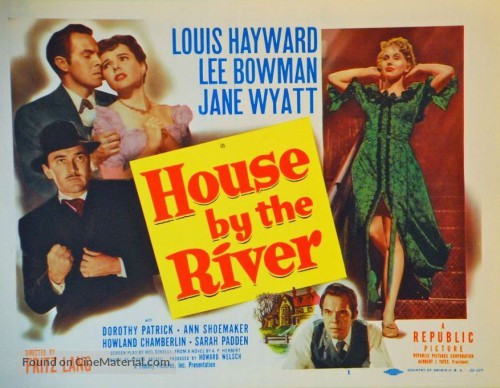
House by the River (Fritz Lang, 1950)
Falls under the category of movies I’ve had on my watchlist for a long time. Fritz Lang’s films always offer something of interest and this one has had a kind of rediscovery of late after a nice DVD presentation by Kino Lorber. A rich novelist kills his maid after she becomes inebriated and attempts to seduce him. The writer dumps the body in the river, shenanigans ensue. There’s a gloomy mansion, Victorian-era set decoration, murders, chiaroscuro and an avant-garde score by George Antheil. Sounds like something I’d prioritize at the TCMFF.
In a Lonely Place (Nicholas Ray, 1950)
Because I just watched this Nicholas Ray film and because it was one of the best things I watched in all of 2017, I think we should all have a chance to see this one the big screen. Humphrey Bogart plays a struggling screenwriter who may or may not have committed murder. Gloria Grahame supplies his alibi, but does she believe in his innocence? Beautifully shot and featuring two actors at the peak of their powers.
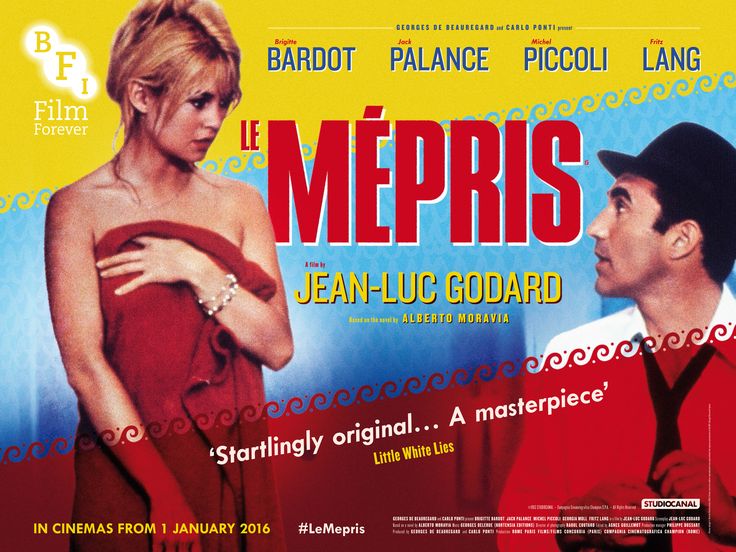
Contempt (Jean-Luc Godard, 1963)
This should become an entry on my personal Cinema Shame list. I’ve owned this Criterion DVD for as long as I can remember, and it still remains unopened. This just happens to fit our theme ever so perfectly. A genius playwright is lured to Hollywood to work on an adaption of The Odyssey by a “vulgur” producer played by Jack Palance. Plus Bridgitte Bardot. I tend to appreciate Godard when I get the opportunity to experience him in the cinema. Make it so.
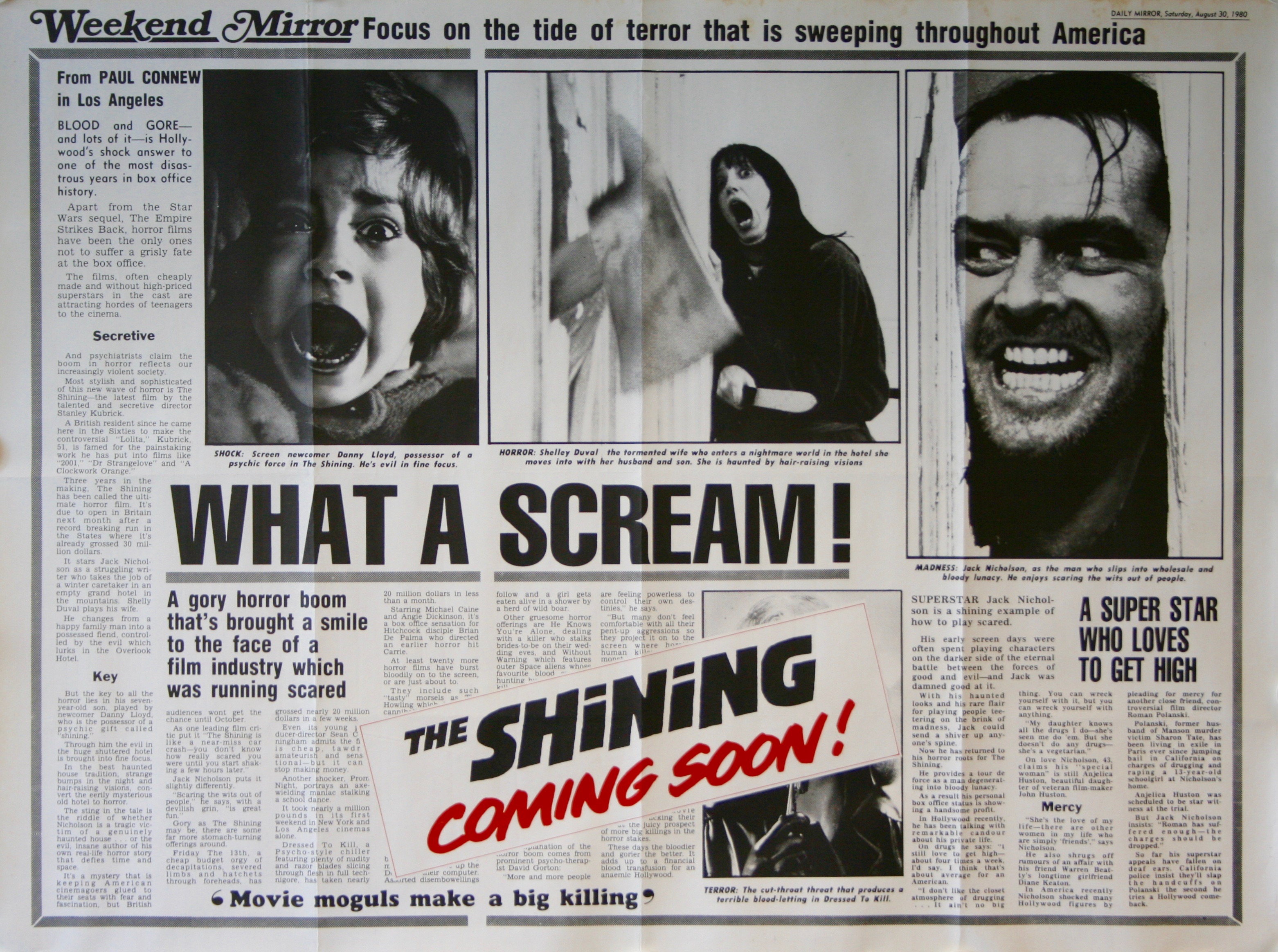
The Shining (Stanley Kubrick, 1980)
As I was considering films about writers that I’ve never had the opportunity to see as the Cinema Gods intended, my mind went straight to Kubrick’s masterpiece. An opportunity to see this at the Egyptian or the Chinese Theater would be a dream come true.
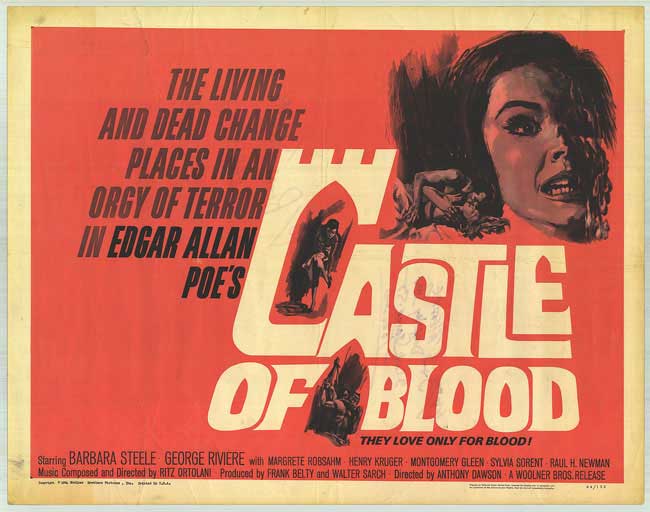
Castle of Blood (Antonio Margheriti, Sergio Corbucci, 1964)
And finally my writer-themed midnight movie. Castle of Blood features a writer spending the night in a haunted, gothic cathedral on “All Souls Eve” in order to challenge the legitimacy of the stories of Edgar Allan Poe (which in this film are presented as non-fiction). An example of the European gothic-style of filmmaking, Margheriti’s film may not be very scary, but his innovative camerawork and use of score makes for a highly entertaining slice of horror cinema. A Barbara Steele classic that should play well among TCMFF attendees — if they give it a chance. It’s style over substance and pure cinema over scares.
I had some idle time in traffic this afternoon and my mind started to wander to the upcoming Turner Classic Movies Film Festival. TCMFF attendees get quite edgy the weeks before the final schedule release. To date we only know a handful of films — these can be found here. It’s a rock solid set of films, but nothing that sets my hair on fire. Not yet.
(By the way, passes still remain for the 2018 Turner Classic Movie Film Festival. If you feel like a trip to Los Angeles in late April, hurry over to the TCM page and pick up a pass today. It’ll be your best purchase of the year.)
Of those films I’m most excited to see my favorite Kurosawa, The Throne of Blood (1957), on a big screen and what I assume will be a 35mm print of The Taking of Pelham One Two Three (1974). The Set-Up (1949) also has some timely relevance because Raquel Stecher and I just discussed on a recent episode of Cinema Shame.
Still, I can’t help but consider the possibilities for what is yet to come. The theme for this year’s festival is Powerful Words: The Page Onscreen. We’re talking adaptations of famous works and writers. We’re talking movies about writers and landmark original screenplays. With that in mind, I let my brain ponder some potentials. What would I want to see with these parameters in mind?
Keep in mind I know absolutely nothing. Anything I guess here will likely not come true and anything I guess correctly will obviously be the product of true genius.
I’ll begin my frivolous exercise by considering big anniversaries. Which films do we have a monumental reason to celebrate? What are some films I’d like to see for the first time at TCMFF this year? Maybe some that just deserve a big screen? Here’s my picks for an Anniversary-oriented Turner Classic Movies Film Festival Wishlist for 2018.
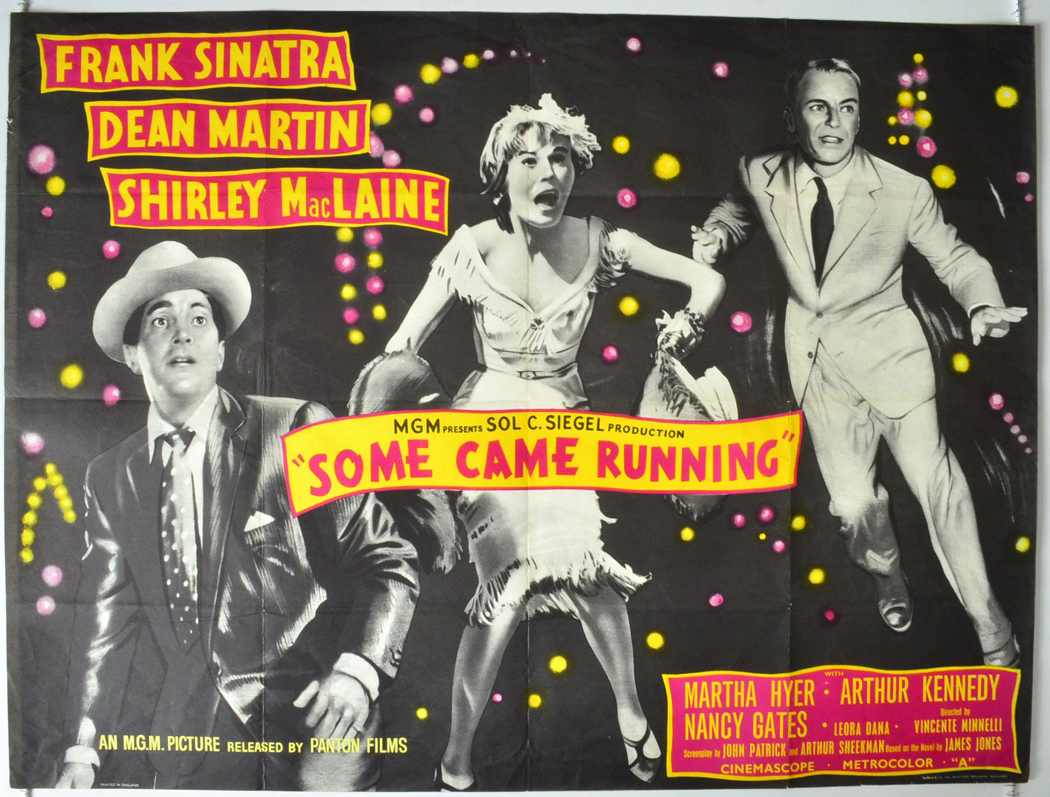
Some Came Running (Vincente Minnelli, 1958)
Frank Sinatra plays a drunk novelist in this drama also starring Dean Martin and Shirley MacLaine. Not only was this Sinatra’s first film with Dino, Shirley MacLaine earned her first Academy Award nomination. Shirley has attended prior Turner Classic Movie Film Festivals, why not another? I’ve been on a Vincente Minnelli kick lately, so I figure I should scratch this off the list, too.
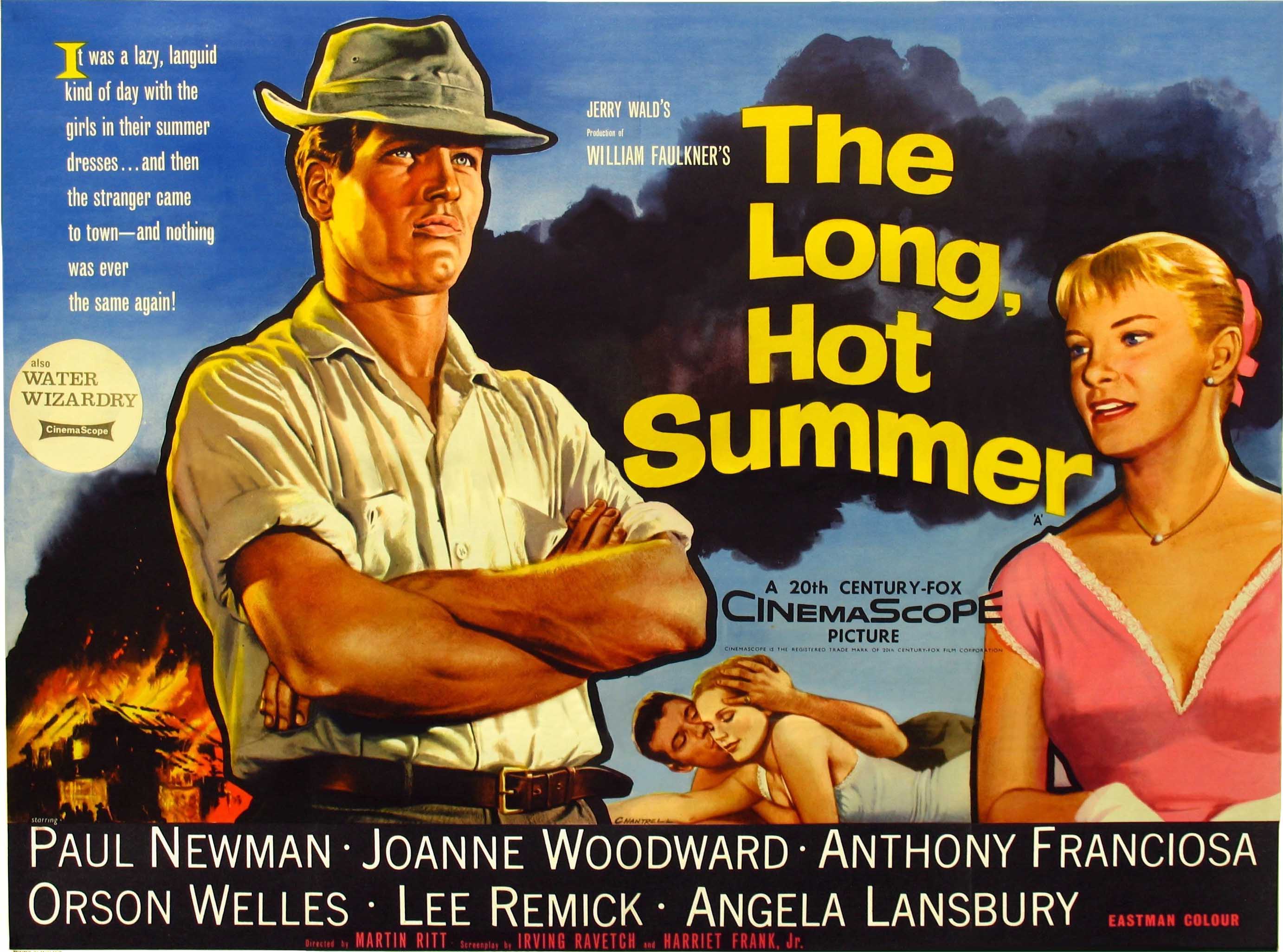
The Long, Hot Summer (Martin Ritt, 1958)
Steamy Paul Newman and Joanne Woodward melodrama based on the short stories of William Faulkner. All that plus Orson Welles, not a bad scribe in his own right. Prior festival attendee Angela Lansbury. Lee Remick. The film re-established Ritt’s career after the Blacklist and fast-tracked Newman’s career. The title came from William Shakespeare’s Hamlet and some of the characters were inspired by Tennessee Williams’ Cat on a Hot Tin Roof. Authorial pedigree, you guys.
The Swimmer (Frank Perry, Sydney Pollack, 1968)
Frank Perry’s excellent David & Lisa (1962) screened at last year’s festival. The Academy gave Perry a director nomination and his wife Eleanor Perry a screenplay nod for this film based on a short story by John Cheever. The Swimmer has received a bit of notoriety after a deserved rediscovery upon the release of the Grindhouse Blu-ray. I’m sure festival patrons would be thrilled to “discover” this Burt Lancaster great for themselves. If we’re talking unique and original voices, this film surely fits the theme.
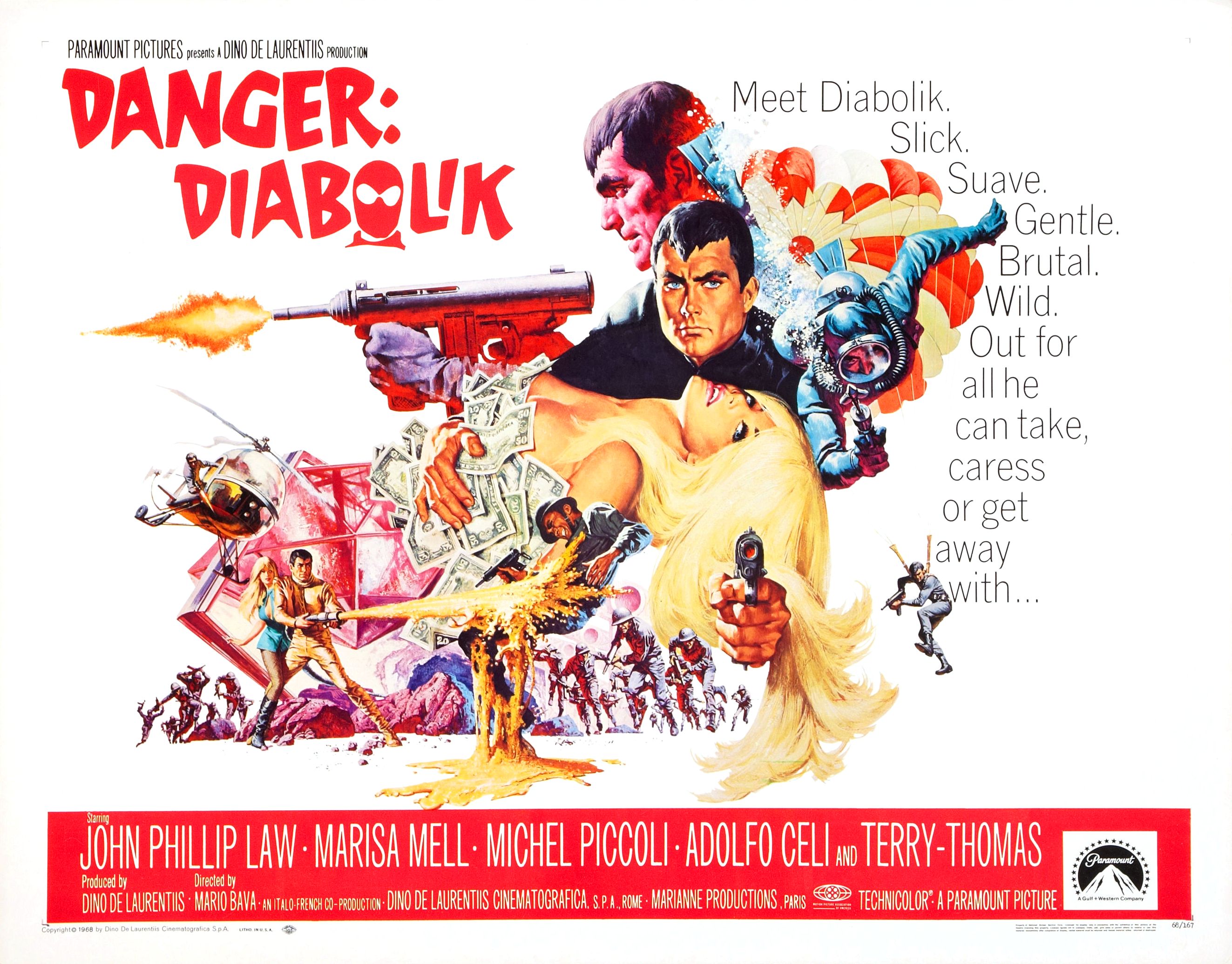
Danger: Diabolik (Mario Bava, 1968)
If I could make one festival request, I would wish this upon everyone as a midnight screening. Not that it wouldn’t play well at any other time, but a midnight screening of Danger: Diabolik would tear the roof off of the Multiplex. I can’t make a connection to “Powerful Words,” except for the fact that it came from a series of Italian comics called Diabolik from Angela and Luciana Giussani.
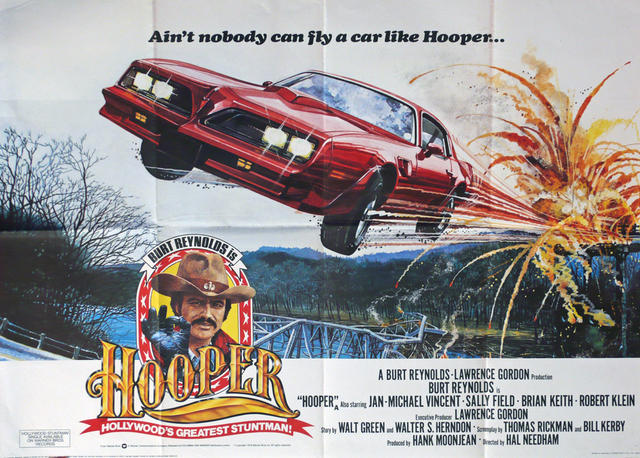
Hooper (Hal Needham, 1978)
Notable for it’s gonzo stunts. Plus Burt Reynolds, Adam West and Sally Field, and I must always hope for a Burt Reynolds film. This would go over really well with a jazzed-up classic film crowd. Fits into the writing category ironically. No writers were needed for the making of this film — yet four are listed in the credits. Maybe Peter Bogdanovich could attend to discuss the Roger Deal character — who was apparently intended as a Bogdanovich spoof.
All that said, what do I know? And per usual, the best and most exciting films at the Turner Classic Movies Film Festival are the ones I didn’t know I wanted to see in the first place. I look forward to what TCM has in store for us… but I really wish they’d take the Danger: Diabolik request into consideration.
I’ve been making a concerted effort to watch through the movies that have been sitting idly on my shelf for ages. Many of which I picked up second hand for a couple bucks. Stuff I bought that seemed like a good idea at the time. (I’m looking at you, Zapped!) After all, there’s a reason I haven’t been able to mark them off the watchlist until now. At some point they just lost their luster. First-Watch Club February exercised a whole bunch of those demons. None of which you’ll see here today.
As much as I enjoy sitting down to experience any manner of movie, of any genre, there’s a perverse pleasure in tossing a mediocre viewing experience into the sell bin. The most brutal and basic of decisions. Will this ever get watched again?
And then there’s the caveats about the scarcity of the film and if it’ll ever get an improved release… how hard it is to find… maybe I want to be someone that owns this movie and can whip it out to shock and horrify friends and neighbors. Fine. So there’s layers of nuance that I can’t quite get into right now.
Still, I recommend the catharsis that comes along with curation. The creation of *my* most perfect collection of collections. This is just one stop along the way to Xanadu. I’ll keep you posted.
First-Watch Cinema Club: February 2018
#5. Professor Marston and the Wonder Women (Angela Robinson, 2017)
Terrific performances from the three leads in what could have easily been a laughable and at times torturous melodrama.
This engrossing and erotically charged bio-picture managed to steer clear of all the biographical trappings. Absent the frivolous layering of importance upon mere humans, Angela Robinson’s movie tells the story of three humans and how they come to terms with an extraordinary situation. There’s no glorification of the struggle. No arbitrary symbolism or hyperbolic narrative beats.
Luke Evans, Rebecca Hall and Bella Heathcote walk a miraculous tightrope of performance. First they each, in turn, garner our loyalties before embracing an alternative relationship that challenges our sensibilities and our expectations. Movies and stories that embrace polygamy almost always deconstruct the relationship from within.
Professor Marsten depicts the love of three people who simply could not live without each other. They are torn apart by those who could not accept them, that did not see the ways in which their relationship bettered their lives and the lives of their children. They only saw the perversion of the norm.
Plus, viewers are treated to a version of the idiosyncratic origin story of Wonder Woman — the creation of a disgraced professor that saw comic books as a means to gaining cultural acceptance for his theories on human interaction. Plus some light bondage. And that’s at least as exhilarating as the story on the pages of the comic.
This is a disgusting, emotionally unsettling exploitative road trip movie with a dehumanizing, nihilistic perception on human ugliness, greed and psychopathy. And it was pretty damn great.
Franco Nero gives a tremendous, layered and animalistic performance. I don’t know if I “liked” the film, but it’s something I won’t soon forget. Worth watching if you can separate the actions from the ideas Campanile wants to express about nihilism, empowerment, and the subversion of genre by way of a Nietzchean superwoman.
Rape. Rape fetish. Alcoholism. Domestic abuse. It’s all here. But it’s also composed in a way that exposes Hitch Hike as a character study with exploitative elements rather than an exploitation film with a few interesting characters.
Corinne Clery and David Hess both do their best to keep up with Nero, but if there’s anything you should know by now it’s to never start a land war in Asia or go toe-to-toe with Franco Nero.
Melville is tone and atmosphere. Bob le Flambeur, likewise, is all tone and atmosphere.
As I’m locking down the last remaining Melvilles, I realized that I mostly started with the latter half of the great French auteur’s career. Bob le Flambeur represents the seeds that would become glossy perfection in films such as Le Cercle Rouge and Le Samourai. An inimitable essence of cool, mood and shadow played out in chiaroscuro and character motivation.
As Bob le Flambeur meandered and meditated on the destructive tendencies of “the flambeur” (which as I learned is not just a gambler, but an extreme gambler — one who would not only wager everything he has, but anything he doesn’t have as well), it pulled me into close proximity due to the minutiae. Roger Duchesne’s mannerisms speak more about the character than 30 pages of dialogue.
By the time we get to the final scene, the choices these characters have made fall right in line with our expectations. Even though Melville wrote a face-value “twist” ending, it’s not a twist if we, the viewers, are paying attention. There’s no subversion of expectation. Bob does what Bob was always going to do.
The most interesting thing about Bob le Flambeur is the perhaps the ways that Bob reflects the personality of Melville as a filmmaker. It may resist any kind of catharsis, but Bob is simmering cool, the kind you can’t fake.
A shocking late entry to the countdown that I viewed as part of a #Bond_age_ live tweet.
Anthony Mann’s final film (he died during filming) displays a keen sense of the espionage genre as a sincere enterprise in the wake of James Bond’s box office megalomania.
There’s no nudge nudge, as was common during these late 1960’s spy films. There’s only a wry smile, a pretty but dim girl, and a bunch double crossing. Oh, and Laurence Harvey’s excellent coif. Mann’s sense of depth and focus presents even tossaway scenes as visual perfection.
There’s a clarity of vision and purpose here that was lacking in most straight espionage films. Strong lead performances from Harvey and Courtenay buoy the film by grounding it even as the narrative spins out of control and Mia Farrow threatens to turn her scenes in Laugh-In! interludes.
One of three John Carpenter films I’d never seen. Prince of Darkness had such a lackluster reputation that I resisted its temptation for 31 years. I regret all of it.
Prince of Darkness could be called The Thing From Another Church as it borrows liberally from Carpenter’s masterpiece of frozen paranoia, The Thing.
This unsettling horror concoction finds a team of scientific researchers trying to explain a vat of green Double Dare goo that appears to be the liquid son of Satan in a incubator. Small flourishes of humor populate the deadly serious consideration of the subatomic evil that lives just beyond the mirror image of our world.
Interesting dialogue about the anesthesia of organized religion and humankind’s skepticism vs. faith. This atmosphere, the creeping post-apocalypse, and this eerie and somewhat unexpected finale crawl under your skin and set up permanent residence. While this isn’t generally considered top-tier Carpenter, it at least needs to be in the conversation.
I viewed this film at the Hollywood Theater as part of the John Carpenter festival. Immediately after the film, the non-profit theater organization had to close its doors. Forced out by another group that aims to turn the oldest movie house in Pittsburgh into just another place to view contemporary films. It makes me sick to lose such a resource right here in my back yard, but I take some solace that I was at the last picture shown at the Hollywood.






 Melville is tone and atmosphere. Bob le Flambeur, likewise, is all tone and atmosphere.
